
BD plans deployment of 2,500 Ansar Personnel to protect Railways after 38 sabotage incidents
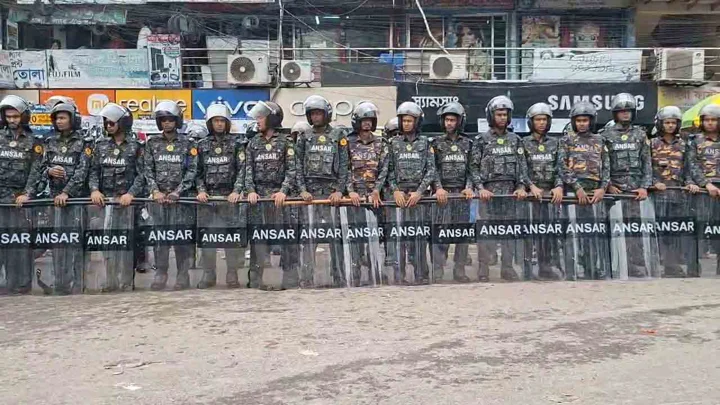
Bangladesh’s Railways Ministry has proposed deploying 2,000 Ansar and 500 Battalion Ansar personnel for December and January to strengthen railway security after 38 sabotage incidents were reported in the country’s eastern and western railway zones between November 9 and 21.
The incidents have raised concerns over the safety of passengers, trains and critical railway infrastructure. The ministry is also considering baggage screening at stations, CCTV installation, closure of unauthorised entry points, intelligence surveillance of railway tracks and round-the-clock joint patrols.
A special law-and-order meeting was held at the Railways Ministry last Thursday to determine measures for passenger safety and the protection of sensitive railway installations and tracks. The proposals were presented at the meeting.
The ministry has already sent a letter to the Home Ministry requesting the deployment of 2,000 Ansar personnel for December and January. Railway Police has separately written to Police Headquarters seeking the deployment of 500 Battalion Ansar personnel.
Railways Secretary Md Fahimul Islam told Ajker Patrika, “We planned to deploy 2,000 affiliated Ansar personnel. They have been deployed according to that plan. Another 500 Battalion Ansar personnel will work with the GRP. They have been deployed since Saturday. They will perform duties at stations and designated areas adjacent to stations under the instructions of divisional railway managers and the Railway Security Force.”
According to information presented at the Railways Ministry meeting, 21 sabotage incidents occurred in the eastern zone and 17 in the western zone between November 9 and 21—an average of nearly three incidents a day.
Railway authorities said sabotage can disrupt train operations and may lead to major accidents and casualties, particularly through the removal of nuts, bolts and fishplates from tracks or arson attacks on trains. Security measures are therefore being planned for railway tracks, yards, parking areas and other key installations, in addition to stations and trains.
Responding to questions over the 38 incidents and possible security lapses, Fahimul Islam said, “The political situation may be one reason. These incidents occurred sporadically in different places. There was no deficiency in our security arrangements. Nevertheless, we are deploying additional security personnel as a precautionary measure.”
The proposals include deploying additional law-enforcement personnel at all stations, screening passengers’ bags and luggage at main entrances using X-ray scanners or metal detectors, installing CCTV cameras at important stations and repairing non-functioning cameras already in place.
Railway authorities also plan to close vulnerable boundary walls and unauthorised entry points. Security responsibilities for trains standing at stations, yards or during stoppages are to be formally handed over, with duty records maintained in logbooks in line with the 1985 Security Manual.
The plan calls for enhanced intelligence surveillance to prevent attempts to cause accidents by removing track nuts, bolts and fishplates. Railway Security Force personnel and Government Railway Police members are expected to strengthen 24-hour joint patrols and coordination, while railway staff and security personnel on moving trains will be instructed to remain more vigilant.
Authorities have also proposed checking the functionality and expiry dates of fire extinguishers at stations, trains and railway facilities. Regular fire safety and rescue drills for railway employees, Railway Security Force personnel and Government Railway Police members have also been proposed.
Other measures include clearing vegetation around railway installations, ensuring adequate lighting, keeping quick response teams and striking forces ready at trains and stations, involving local public representatives and community leaders, and raising public awareness through media campaigns.
Bangladesh Railway, Railway Police, the Railway Security Force, Police Headquarters, Ansar and Village Defence Force, and relevant intelligence agencies are expected to be assigned responsibilities for implementing the measures.
Professor Shamsul Hoque of the Department of Civil Engineering at Bangladesh University of Engineering and Technology said, “Security cannot be ensured by temporarily increasing manpower. Weaknesses in the existing railway security system must be identified, and regular monitoring and effective permanent measures must be established.”