
India Seeks Permission for Private Container Trains to Operate through Bangladesh
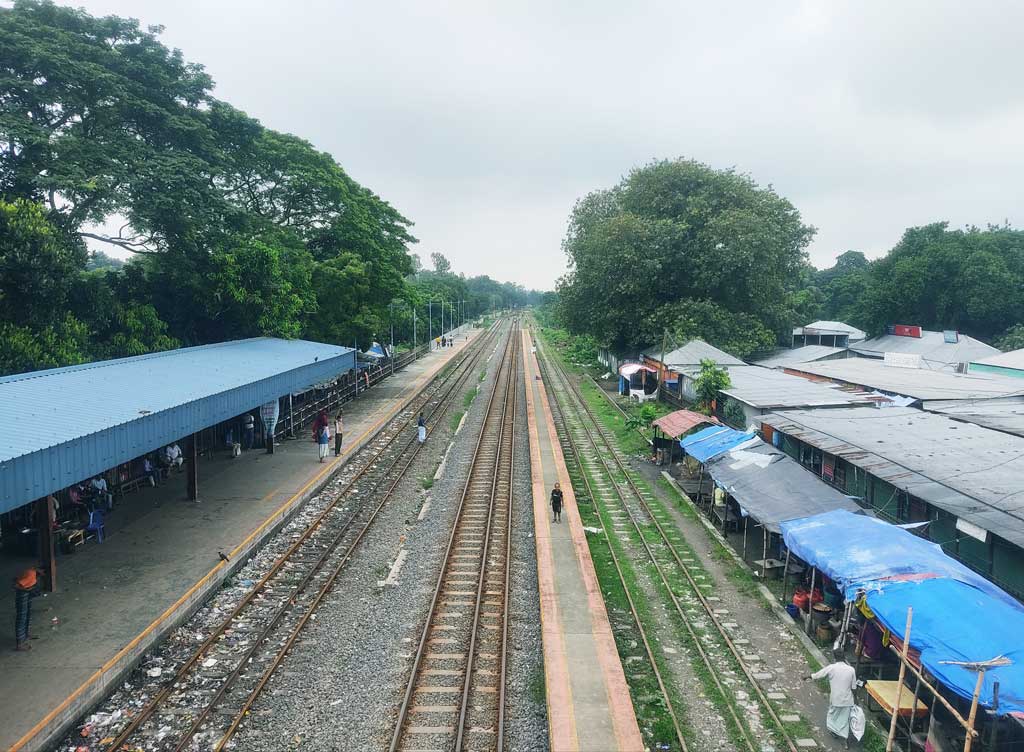
India has requested permission for its private container train operators to carry goods directly to destinations inside Bangladesh using the country’s rail network, according to minutes of the 38th Bangladesh-India Inter-Governmental Railway Meeting held in Dhaka from September 8 to 10. Bangladesh said Indian Railways would have to bear full responsibility and liability for any private Indian operator allowed to run trains in Bangladesh.
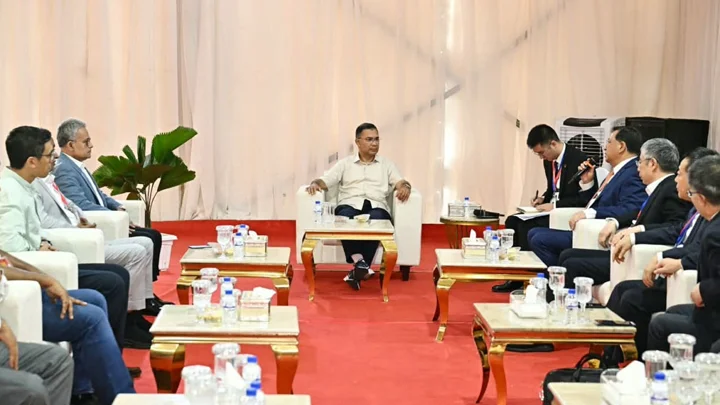
The meeting minutes, signed by the heads of the two countries’ delegations and obtained by Ajker Patrika from Ministry of Railways sources, also record Indian proposals for round-the-clock freight train operations on three cross-border routes, increased train-handling capacity and direct freight booking between stations in the two countries.
Bangladesh asked India to submit formal proposals and technical information for reviewing several requests. Bangladesh also indicated that existing arrangements should continue in some cases.
Indian government and private container trains currently carry containers up to the Indian side opposite the Benapole border. After entering Bangladesh, the containers are transported by local trailer trucks to inland container depots or other destinations.
India has sought permission for private container train operators, known as CTOs, to run trains directly into Bangladesh and transport containers to their final destinations. Bangladesh reiterated the position it took at the 37th Inter-Governmental Railway Meeting in New Delhi in January 2025, stating that Indian Railways must assume complete responsibility if private Indian container operators are permitted to operate in Bangladesh. Bangladesh said the matter could be discussed at an appropriate forum.
India requested 24-hour freight train operations, instead of services running from sunrise to sunset, on the Darshana-Gede, Petrapole-Benapole and Rohanpur-Singhabad routes. Bangladesh said freight movement on these routes had declined over the past two years but was recently increasing, adding that action could be considered based on the volume of cross-border trade.
India also urged Bangladesh to speed up train acceptance on the Rohanpur-Singhabad route, alleging that Indian Railway wagons and locomotives remain stranded for long periods because of delays. Bangladesh said it received 57 rakes through five interchange points in August 2026. Bangladesh cited limitations involving locomotives, manpower and rail lines, saying it would be difficult to receive more rakes on the Rohanpur-Singhabad route. Bangladesh proposed operating more rakes through other interchange points.
India requested increased capacity at freight loading and unloading stations in Bangladesh’s western region. Bangladesh said it had started work to increase the “clear standing length” at 12 freight unloading stations. Capacity expansion work is also under way at Sirajganj Bazar, Ibrahimabad, Nawapara, Faridpur and Ullapara stations.
Bangladesh said initiatives had been taken to adjust yard capacity and manpower to reduce the turnaround time of Indian wagons to below five days.
India proposed direct booking from Indian Railway freight stations to Bangladeshi freight stations to reduce congestion at the border. Bangladesh said implementing such an arrangement would require amendments to the basic and supplementary regulations governing rail traffic exchanges between the two countries.
Bangladesh said limited wagon-receiving capacity at domestic stations could create additional pressure and supported retaining the existing rebooking system for now.
India proposed increasing the authorised carrying capacity of BCN and BCNA wagons to 63 tonnes and 66 tonnes respectively. Bangladesh said not all railway lines, bridges and culverts in the western region could handle such loads. Bangladesh said it could examine specific routes if India submitted a formal proposal.
India also requested permission to receive full-length 45-wagon container trains at Benapole, revise freight charges and allow the movement of open-top containers. Bangladesh said Benapole could receive full-length trains, but equipment for unloading goods from open-top containers was unavailable.
Bangladesh opposed India’s proposal to introduce customs facilities at Jessore, among four stations, and said the feasibility of such facilities at Nawapara could be examined. A proposal to transport goods from Kamalapur ICD to India will be considered after a new ICD becomes operational at Dhirashram.
The two sides discussed the possibility of operating freight trains from Chattogram port to Nischintapur in Agartala, the capital of India’s Tripura state, and passenger trains from Dhaka to Nischintapur. Bangladesh asked India to provide demand forecasts for import-export cargo and submit formal proposals.
Bangladesh blamed financial problems faced by an Indian contractor, shortages of construction materials and cost-related complications for slow progress on the Kulaura-Shahbazpur rail link project. India requested payment of Tk450 million in VAT dues owed to the contractor.
India assured Bangladesh that construction materials for the Dhaka-Tongi-Joydebpur project would be supplied quickly.
The two countries also reported differences in their calculations of dues related to wagon use. India said its receivables stood at Rs3.9099 billion in June 2026, while Bangladesh said it had net receivables of Tk2.1384 billion from Indian Railways.
Bangladesh said it had initiated steps to pay India Tk500 million in dues related to passenger trains. Both sides agreed to update accounts regularly and reconcile outstanding payments.
India proposed providing customs and immigration services throughout the journey of the Bandhan Express and operating the Maitree Express via the Padma Bridge. Bangladesh said a decision on the Bandhan Express proposal would be made after reviewing passenger demand and practical conditions.
Bangladesh asked India to submit a formal proposal through diplomatic channels for operating the Maitree Express via the Padma Bridge.
Bangladesh proposed attaching luggage vans, or VPUs, to passenger trains for parcel transportation. India agreed but requested a formal proposal.
The meeting also discussed railway electrification, updating regulations, station development and training. The next Inter-Governmental Railway Meeting is scheduled to be held in India in September 2027.
Bangladesh did not raise any proposal at the meeting on resuming three important and popular passenger train services that are currently suspended. Mohammad Ziaul Haque, Additional Secretary of the Ministry of Railways and head of the Bangladesh delegation, told Ajker Patrika: “It is a government decision. We discussed only the issues that Bangladesh had on the table.”
BUET Professor Shamsul Hoque, a transport expert, said: “Political disputes and economic interests must be viewed separately. What benefits the country should take priority in international negotiations. But the lack of specialised knowledge and research in ministries is making it difficult to take effective decisions and negotiate in the national interest.”