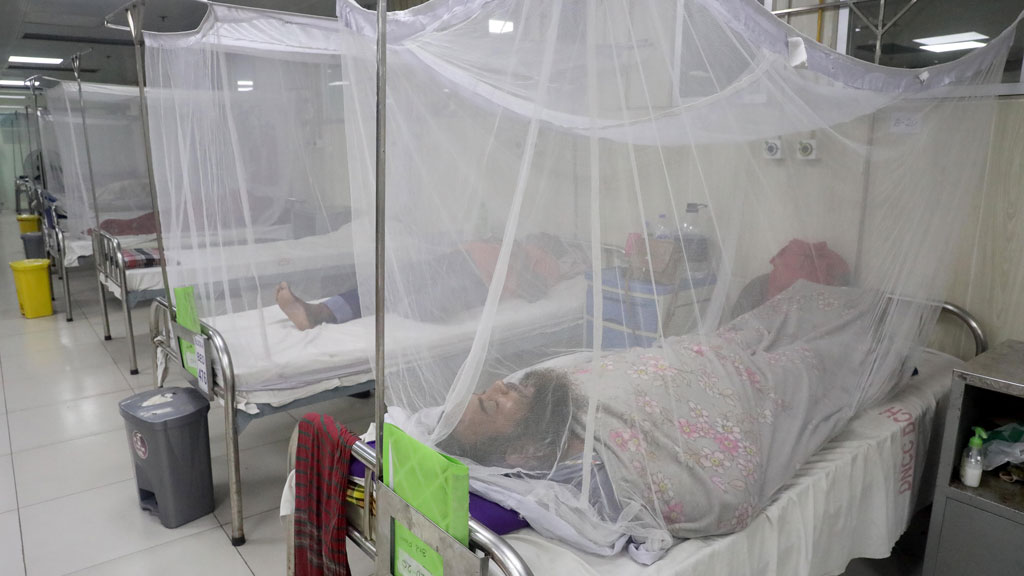

Measles and Dengue Co-Infections Raise Health Risks for Children in Bangladesh
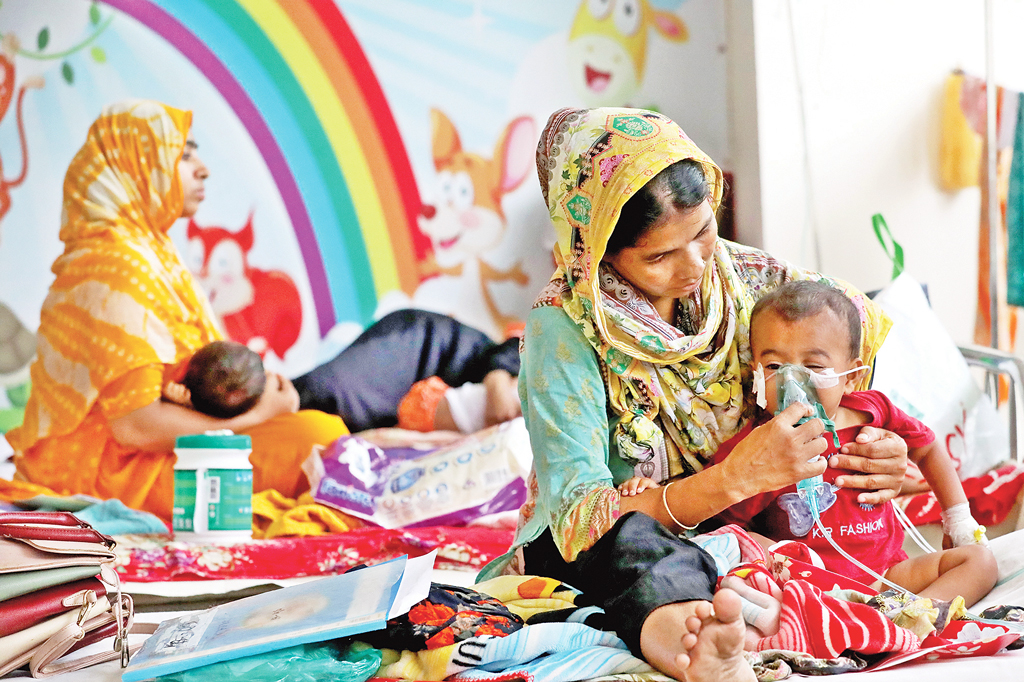
Children in Bangladesh are facing heightened health risks as measles and dengue outbreaks overlap, with some diagnosed with the diseases sequentially and others simultaneously. Doctors say co-infection can complicate treatment, increasing the risk of pneumonia, breathing difficulties, brain inflammation and death.
The deaths of two brothers in Chattogram, both infected with measles, dengue and pneumonia, have drawn nationwide attention to the risks of multiple infections. The boys, aged 10 years and 10 months, died while receiving treatment at Chattogram Maa O Shishu Hospital on November 6 and November 8, respectively.
Their father, low-income worker Mohammad Kabir, was heard grieving at the hospital: “I am finished.” Their mother, Amina Begum, was reportedly so traumatised that she sometimes could not recognise her husband.
Bangladesh has experienced an unprecedented level of measles infections and deaths this year, while dengue cases have been rising steadily for several months. Children have been the main victims of measles.
Doctors said measles can weaken a child’s immune system and lead to complications such as pneumonia and respiratory distress. Dengue infection alongside measles may further worsen the patient’s condition, although doctors said it has not been established whether measles-related immune weakness directly increases the severity of dengue.
Information collected from at least four specialised hospitals in Dhaka found that at least 10 families had children treated for both measles and dengue during the past two weeks.
A five-year-old boy from Badda in Dhaka, identified by the pseudonym Muslima Jahan’s son, was diagnosed with dengue on September 21. Two days after being admitted to a private hospital in Badda, he was transferred to Shaheed Suhrawardy Medical College Hospital, where he remained under treatment until October 10.
Doctors later diagnosed the child with measles after he developed a rash. He was admitted to Bangladesh Shishu Hospital and Institute on October 11 and remained there until October 18.
“During treatment, my son’s skin was peeling off,” his mother said. “His skin has still not fully returned to normal. He also had infections in his blood and urine.”
Four-year-old Riyadul Islam, also a pseudonym, was diagnosed with dengue on October 16 while admitted to the measles ward at Shaheed Suhrawardy Medical College Hospital. His condition initially improved with treatment at home, but he later developed a fever again and was admitted to a private hospital in Dhaka on October 22.
Riyadul was transferred to Suhrawardy Hospital two days later, where measles was diagnosed while he was still suffering from dengue, his father said.
Another case involved four-month-old Rajat Ray, a pseudonym, from Charbhadrasan in Faridpur. After receiving treatment for four days at a local private hospital for fever and cold symptoms in the middle of last month, the child developed breathing difficulties.
Rajat was taken to Bangladesh Shishu Hospital and Institute in Dhaka, where he received treatment for seven days, including three days in the neonatal intensive care unit. Doctors initially diagnosed him with measles and pneumonia before detecting dengue, his mother Aparna Ray said. The child received treatment for nearly three weeks in Faridpur and Dhaka.
A 2015 study from Sudan, published in the United States-based Journal of Medical Virology, found evidence of both infections in 10 of 60 people whose blood was tested after they presented with measles symptoms. The study reported relatively higher rates of severe illness and death among co-infected patients.
Professor Dr Atikul Islam, a paediatric infectious disease specialist at Bangladesh Shishu Hospital and Institute, said children with measles and dengue co-infection could develop complex conditions.
“Measles can cause pneumonia and breathing difficulties,” he said. “If dengue is added to this, the patient’s condition can become more complicated.”
Dr Islam said children diagnosed with dengue after admission for measles are generally treated in the measles ward. Patients admitted for dengue who are later diagnosed with measles cannot always be transferred elsewhere, although separate cabins are arranged in special circumstances.
Hospitals do not maintain separate records for measles-dengue co-infections, he said. Patients are generally registered according to the illness for which they were first admitted.
Bangladesh Shishu Hospital and Institute recorded 898 dengue admissions between January and November 9 this year, including seven deaths. During the same period, 3,668 patients were affected by or admitted with measles-related illness, while 104 people died from measles complications.
Across Bangladesh, measles infections and deaths continue to be reported. The Directorate General of Health Services said 1,284 people had died from measles and measles-like symptoms since March 15, including 105 confirmed measles deaths and 1,179 deaths involving measles symptoms.
Dengue has claimed 466 lives among patients receiving treatment this year, while total hospital admissions have reached 152,173.
Dhaka’s Infectious Diseases Hospital recorded 54 measles deaths this year. The hospital admitted 2,968 patients with measles symptoms and 744 patients with confirmed measles, in addition to around 50 dengue patients.
Dr F A Asma Khan, superintendent of the Infectious Diseases Hospital, said treatment for both diseases must be provided at the same time when patients have simultaneous infections.
“If someone is infected with measles and dengue at the same time, treatment for both diseases has to be managed together,” she said. “However, they cannot be kept separately.”
Dr Mirza Golam Sarwar, director of Shaheed Suhrawardy Medical College Hospital, said the presence of two infections at the same time could increase the risk of complications, although such cases were not very common.
Epidemiologists said simultaneous outbreaks increase the likelihood that an individual may contract both diseases. Measles can be effectively prevented through vaccination, while dengue control requires government measures to control Aedes mosquitoes and greater public awareness.
Professor Dr Mahmudur Rahman, former director of the Institute of Epidemiology, Disease Control and Research, said measles and dengue required different disease-control strategies.
“When two diseases spread widely, a person can be infected with both,” he said. “When two infections occur together, there is a risk that the patient’s physical condition will become complicated. Measles is highly contagious, while dengue spreads through Aedes mosquitoes.”
Epidemiologist and former principal scientific officer Dr. Mushtuq Husain said, both measles and dengue had become major public health challenges in Bangladesh.
“If a person contracts dengue after being infected with measles, their condition may become more fragile,” he said. “The situation requires not only hospital-based treatment but also coordinated and effective initiatives to prevent and control infections, which are currently lacking.”