
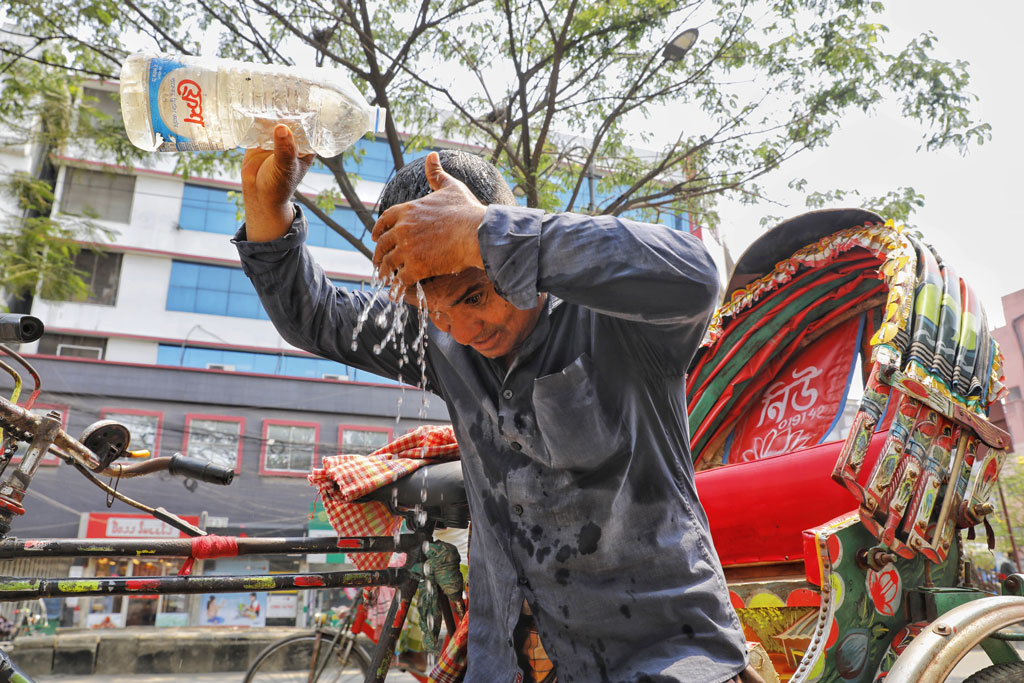
Bangladesh suffered an estimated economic loss of $1.3 billion to $1.8 billion in 2024 because extreme heat reduced labour productivity, according to a new World Bank report. The loss is equivalent to about 0.3% to 0.4% of the country’s GDP, with damages rising sharply once daytime temperatures exceed 37 degrees Celsius.
The report, titled ‘A Liveable Future: Protecting Jobs and Growth from Extreme Heat in South Asia’s Cities’—was published on Wednesday.
The World Bank said Dhaka is facing the most severe effects of extreme heat in Bangladesh. Nearly 3% of annual working hours are being lost in the capital because of unbearable heat, an impact equivalent to about 465,000 full-time jobs lost each year.
The report warned that if current conditions persist, losses in Dhaka could more than double by 2080. By then, about 7.4% of the city’s productive time could be lost to heat.
The World Bank also said Bangladesh’s ready-made garment sector is now facing risks worth several billion dollars because of extreme heat. Citing a joint analysis by the International Labour Organization, the International Finance Corporation and Cornell University’s Global Labor Institute, the report said that without effective heat mitigation measures, the garment sectors of Bangladesh, Pakistan, Vietnam and Cambodia together could lose about $65.8 billion in export earnings by 2030.
The report said the outlook can still be changed through proper and targeted financing. It noted that the government established the Green Transformation Fund in 2016 to install energy- and water-efficient equipment in garment factories and improve working conditions.
The World Bank said that although the initiative began with only a small number of factories, it is now making a major contribution to transforming the entire ready-made garment sector.
The report added that this transformation was later strengthened through the IFC’s Partnership for Cleaner Textile and sustainable loan support. It said that by the end of 2025, the number of Leadership in Energy and Environmental Design-certified garment factories in Bangladesh had exceeded 270.
The report also highlighted a social crisis in the garment sector. The World Bank said excessive heat is preventing female workers in factories from meeting production targets, increasing their risk of violence and abuse.
Across South Asia, extreme heat is causing losses equivalent to about 31 million full-time jobs every year, the report said. It warned that the regional economy could shrink by about 7% by 2050 as a result.
The report noted that South Asia is expected to add about 280 million working-age people to its economy by 2050. It said rising temperatures are emerging as one of the biggest threats to employment, productivity and long-term economic growth at a time when labour force expansion is expected.
The World Bank estimated that by 2070, about 520 million people in South Asia will face extreme and dangerous heat for at least one month each year, four times the current level.
Citing Global Burden of Disease data, the report said heatwave deaths in Bangladesh and India had doubled in 2023 compared with 2000. In Sri Lanka, such deaths increased to nearly four times the earlier level.
The report said extreme heat is already reducing workers’ capacity, disrupting business activity and putting the economic strength of South Asia’s cities at risk. It also said heat is increasing pressure on health systems and emergency infrastructure, with low-income people, informal workers, women, older people and children suffering the most.
Johannes Zutt, the World Bank’s Vice President for the South Asia region, said building heat-resilient cities is not only about protecting people from high temperatures. He said the goal is to protect jobs, raise productivity, attract new investment and keep urban economic growth moving. He added that if the right steps are taken now, countries can build sustainable, competitive and highly liveable cities that open new opportunities for future generations.