
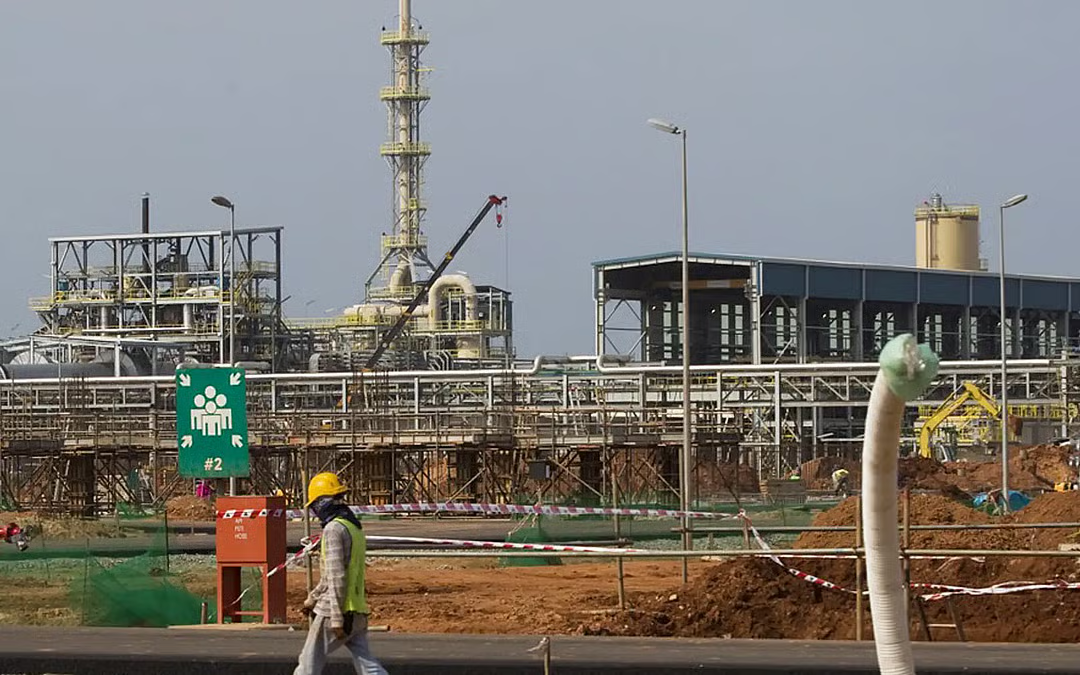
Australian rare earths company Lynas said Tuesday it has partnered with South Korea's JS Link to build a permanent magnet factory in eastern Malaysia, a move that links its raw material production with downstream manufacturing.
Lynas, which operates the largest commercial rare earths processing plant outside China, said it will invest about US$35 million in the facility near its site in Kuantan, around 250 kilometres (160 miles) east of Kuala Lumpur.
The plant is expected to produce 3,000 tonnes of magnets annually using the rare earth element neodymium, with iron and boron.
The magnets are "intended to supply automotive, wind energy and electronics manufacturing supply chains including in South Korea, Malaysia "and other key markets", Lynas said in a statement.
Under the agreement, Lynas will supply rare earth materials to the new Malaysian plant as well as JS Link's facility in Yesan, South Korea, under an exclusive commercial arrangement running until January 2038.
The project is expected to create around 400 jobs.
Lynas's Gebeng facility, which has been running since 2012, supplies materials used in a range of products including electric vehicles, mobile phones and missiles.
It has cornered around 10 percent of the world's rare-earth market, with the other 90 percent made in China.
Malaysia has around 274,144 metric tonnes of rare earth minerals, Malaysia's Environmental Sustainability Minister said in January.
Other rare earths firms are also eyeing Malaysia as a strategic focal point for the sought-after resource.
French company Carester on Monday announced plans with local firm Malaco Mining to build a rare earths separation plant in the northern Perak state under a 10-year joint venture.
The facility is expected to process around 13,000 tonnes annually, Carester chief executive Frederic Carencotte said.
But rare earth production has also come under fire in Malaysia, particularly over environmental concerns and the supply to the arms manufacturing industry.
Also on Monday, a group of 20 NGOs protested outside the Malaysian parliament, where they handed over a memorandum calling for stronger oversight of the supply chain of rare earths leaving the country.
"Malaysia has an opportunity to demonstrate leadership by strengthening transparency, accountability, and human rights safeguards across the rare earth sector," the group said.