

Stock markets diverge as tech recovery stutters
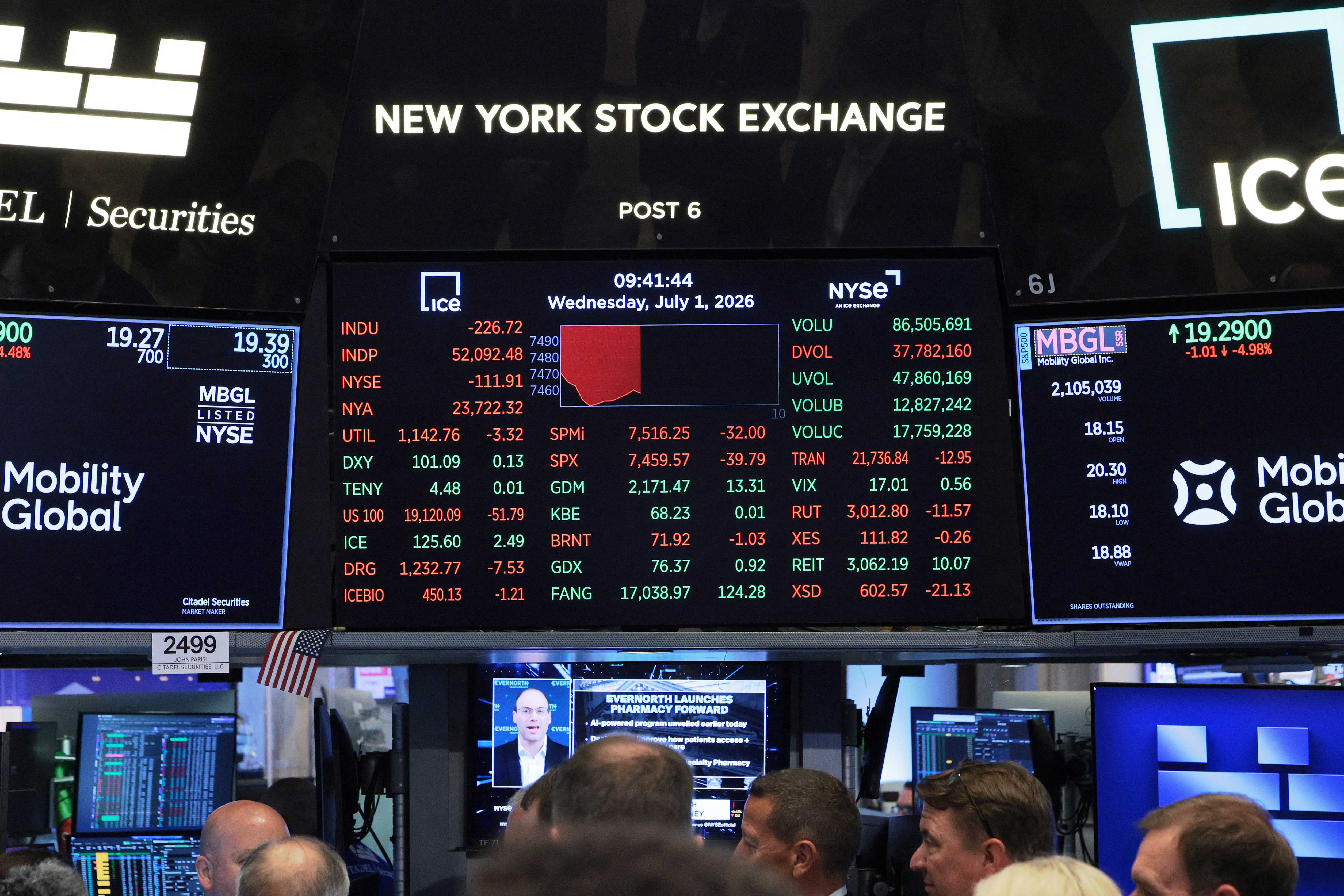
Major stock markets traded mixed Monday as a recovery for technology share prices petered out and quarterly earnings season kicks into gear.
After a tough end to June -- fuelled by worries that company valuations linked to the AI boom may have been overdone -- the mood lifted last Thursday after data showed the United States created fewer jobs than expected last month.
That soothed fears that the Federal Reserve could hike interest rates amid elevated inflation.
Even so, the dollar rose against main rivals Monday, with traders awaiting minutes this week from the Fed's last policy meeting.
"Investors are not walking away from the AI story, but they are asking whether a sector priced for perfection can keep delivering," noted Patrick Munnelly, a market strategist at traders Tickmill Group.
Talk is centred on when firms will see returns on the trillions of dollars invested in artificial intelligence and whether valuations have run ahead of themselves.
Sentiment won a lift from Taipei-listed Hon Hai, with the maker of AI servers announcing a forecast-beating jump in second-quarter sales and predicting further growth.
The firm, also known as Foxconn, has gone beyond assembling low-margin iPhones to making AI servers for Nvidia, along with electric vehicles and robots.
The company's share price rose more than six percent Monday.
The update, coming at the start of an latest earnings season, was being pored over for an idea about the AI outlook.
Also in view is the Wall Street debut of South Korean chip titan SK hynix, which sees its $29-billion listing on Friday.
Elsewhere on Monday, oil prices extended losses as tankers continued to pass through the Strait of Hormuz and on optimism over US-Iran peace talks.
However, SPI Asset Management's Stephen Innes warned the benefits could take some time to feed through the economy.
"A few more tankers moving safely through Hormuz may take the edge off the immediate panic premium, but it does not undo the cost pressures already working their way through the global economy," Innes noted.
Karsten Junius, chief economist at Bank J. Safra Sarasin, said "oil exports remain well below pre-war levels and bottlenecks are likely to persist.
"Meanwhile, efforts to re-build strategic and commercial reserves should support demand.
"As a result, oil prices are likely to settle around $75-$80 a barrel over the coming year, keeping the inflation trajectory more elevated this year," he added.