
Bangladesh Garment Export Prices, Volumes Fall Sharply in EU Market
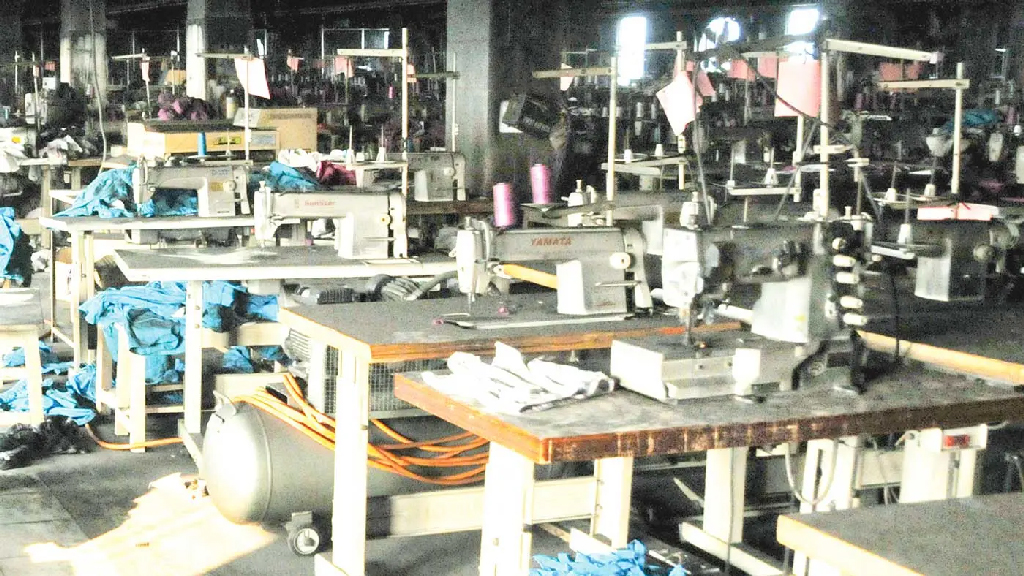
Bangladesh’s ready-made garment exports to the European Union declined sharply in both price and volume in the first four months of 2026, according to the latest Eurostat data, underscoring mounting pressure on exporters amid weak consumer demand, price cuts by global brands and intensifying competition from rival supplier countries.
From January to April 2026, the average unit price of Bangladesh’s garment exports to the EU fell 10.45% year-on-year. Export volume also dropped by nearly 10% over the same period. Exporters are now facing pressure not only from fewer orders, but also from having to sell at lower prices to maintain their foothold in the market.
Eurostat data showed total EU clothing imports fell 10.42% year-on-year to 27.77 billion euros during January-April 2026. Import volume declined 5.48% and the average unit price dropped 5.22%, indicating that the market contracted because of both weaker consumer demand and lower prices.
Within that market, Bangladesh’s garment exports to the EU fell 19.33% to 6.09 billion euros from 7.54 billion euros a year earlier. The average export price per kilogram dropped to 13.96 euros from about 15.60 euros a year ago. April-only data showed the same trend: Bangladesh’s export value fell 19.53%, export volume dropped 14.63% and unit price declined 5.74%.
Industry insiders said Bangladesh has been forced to sell garments at lower prices because of weak global demand, pressure from international brands to cut prices, rising production costs and aggressive pricing by competing countries. They said the trend is squeezing both export earnings and factory profits.
Mahiyuddin Rubel, former director of the Bangladesh Garment Manufacturers and Exporters Association, or BGMEA, and additional managing director of Denim Expert Limited, told Ajker Patrika that Bangladesh’s situation is more worrying than that of competing countries. China has managed to retain market share by cutting prices and increasing export volume, while Vietnam has sustained earnings by exporting higher-value products, he said. Bangladesh, by contrast, has fallen behind in both price and volume, which he described as a warning sign for the sector’s competitiveness.
Fazlee Shamim Ehsan, executive president of the Bangladesh Knitwear Manufacturers and Exporters Association, or BKMEA, said buyer pressure to lower prices is not new, but the situation has become more difficult in recent months. Inflation in Europe, restrained consumer spending and major brands’ heavy discounting strategies are directly affecting supplier countries, he said, forcing Bangladeshi exporters to offer goods at lower prices to retain orders.
The pattern among competitor countries was different, the report said. China increased export volume even as its unit price declined. Vietnam, meanwhile, raised unit prices by nearly 7% by selling higher-value products. Prices in Turkey and Cambodia were comparatively stable. No other major exporter recorded a sharp deterioration in both price and volume at the same time on the scale seen in Bangladesh.
From January to April, China’s export value fell just 4.70%, but the country increased export volume by 3.25%, although its unit price fell 7.70%. Analysts said China cut prices to defend market share.
Vietnam’s export value was nearly stable, falling only 0.70%. Although its export volume declined 7.11%, unit prices rose 6.90%, allowing it to maintain earnings through higher-value exports.
India’s export value fell 12.10%, Turkey’s 16.60%, Cambodia’s 12.18% and Pakistan’s 17.94%. However, the nature of the declines in those countries differed from Bangladesh. In some cases, prices held steady while volume fell; in others, volume increased but lower prices reduced earnings.
Economists and apparel-sector analysts said Bangladesh’s planned graduation from the least developed country category in 2029 will gradually reduce tariff benefits in the European market. They warned that unless the country improves value addition, product diversification and production efficiency from now, competition in international markets will become even tougher.
Khandaker Golam Moazzem, research director at the Centre for Policy Dialogue, said Bangladesh will not be able to remain competitive in global markets in the future by relying only on low wages. He said there is no alternative to moving into higher-value fashion products, man-made fibre garments, in-house design development, higher productivity and more efficient supply chains.
Topics:
ready-made garmentsexportimportEU apparel marketexport earningsEuropean UnionBGMEABKMEABangladeshEconomy