
Myanmar obligated to comply with ICJ verdict: Dr Khalilur Rahman
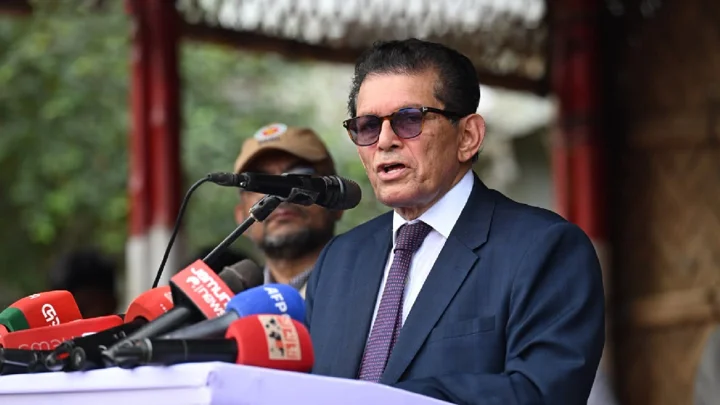
Myanmar must comply with the International Court of Justice’s historic ruling on the Rohingya genocide, as implementing the judgment is mandatory rather than optional, Bangladesh Foreign Minister and President of the UN General Assembly Dr Khalilur Rahman said on Friday, November 20.
Dr Rahman made the remarks at a gathering at the football ground of Rohingya Refugee Camp No. 4 in Ukhiya, Cox’s Bazar.
Thousands of Rohingya from different camps attended the gathering, held a day after the ICJ’s ruling. Participants carried placards demanding justice for genocide, citizenship and safe repatriation.
“What happened to the Rohingya in Myanmar’s Rakhine State in 2017 was genocide,” Dr Rahman said. “The International Court of Justice in The Hague, Netherlands, has delivered a historic verdict on the matter.”
Evidence presented before the court included allegations of mass killings, sexual violence, attacks on women and children, and the destruction of villages by Myanmar’s security forces, he said. The ruling also contained information that at least 10,000 people were killed in the violence.
The ICJ recognised the Rohingya as a distinct ethnic group of Myanmar, Dr Rahman said, describing the ruling as recognition of their long struggle and aspiration for justice.
“No judicial verdict can bring back the dead or heal all wounds,” he said. “But the journey towards justice begins with the establishment of truth.”
Dr Rahman called on Myanmar to immediately investigate, prosecute and punish those involved in the genocide. The ICJ ruling is final and binding, and Myanmar has no option but to implement it, he said.
The foreign minister described the Rohingya crisis as a global issue rather than the problem of a single country. The international community, working with all UN bodies and partner agencies, must pursue a permanent solution, he said.
Implementation of the ruling must be accompanied by safe and dignified repatriation of Rohingya refugees, compensation for victims and effective measures to prevent future atrocities, Dr Rahman added.
Rohingya refugees have repeatedly expressed their willingness to return to Myanmar, but repatriation must be safe, voluntary and dignified, he said. Myanmar must guarantee their security, citizenship, freedom of movement and the right to live without discrimination.
“No one can be sent back by pushing them into danger,” he said.
Humanitarian assistance to refugee camps must continue until safe repatriation is ensured, Dr Rahman said. Bangladesh’s government and people cannot bear the burden alone, he added, calling on the international community and development partners to increase funding for humanitarian assistance.
Dr Rahman told Rohingya refugees that he would convey their voices to the 193 UN member states in New York, with particular emphasis on the concerns of Rohingya women, children and young people.
“The journey for justice began in The Hague,” he said. “Now that justice must reach from the refugee camps of Cox’s Bazar to the Rohingyas’ own villages in Rakhine.”
Rohingya leaders also presented their demands and expectations at the gathering.
Rohingya leader Master Mozammel Hossain said the ICJ ruling had established the Rohingyas’ identity as a distinct ethnic community. He said the community was grateful for international recognition of justice after years of persecution and displacement.
“We want to return to our country with dignity, security and honour,” Hossain said. “We are not people of another country. We are indigenous residents of Burma. We have lived in Myanmar for thousands of years. We want to return there with dignity and honour.”
Rohingya refugee Mohammad Alim said he was from the Lamba Bil area of Buthidaung in Myanmar. He said his family had been forced to flee to Bangladesh after facing persecution, leaving behind relatives, homes and property.
“Bangladesh has helped us greatly, and we are grateful,” Alim said. “We want to return to our country with our rights and entitlements. We want to go back to Myanmar with citizenship and all fundamental rights guaranteed.”
Another Rohingya leader, Khing Mong, said the ICJ ruling had made the Myanmar military’s persecution of Rohingya people clearer before the world. He expressed hope that the President of the UN General Assembly would use his position and responsibilities to help implement the ruling and speak up for Rohingya rights internationally.
Dr Rahman arrived in Cox’s Bazar on Thursday evening. He left for Dhaka on Friday afternoon after visiting Rohingya camps and attending the gathering.
Large numbers of Rohingya live in refugee camps in Ukhiya and Teknaf in Cox’s Bazar, as well as on Bhasan Char in Noakhali. Most fled to Bangladesh after August 25, 2017, amid ethnic persecution and violence by the Myanmar military.