
Damage but no casualties reported from Pacific super typhoon
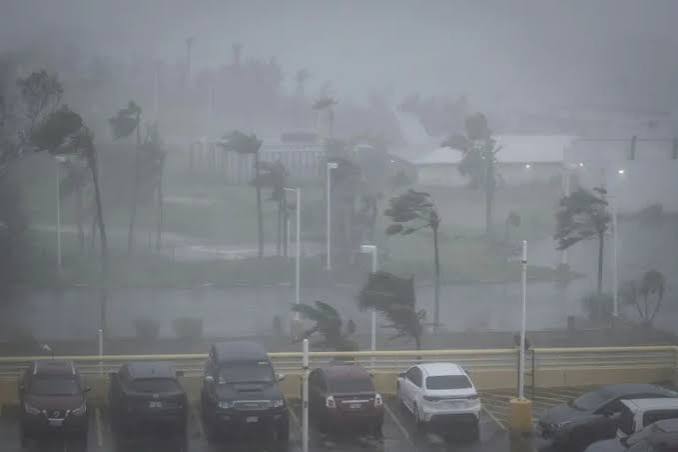
Authorities in the Northern Marianas and Guam reported extensive damage including fallen trees and downed power lines Monday after a super typhoon with the force of a category-five hurricane hit the US Pacific territories.
No casualties had been reported as of early evening, although with
treacherous conditions throughout much of the day hindering clear-up
operations, a full picture was yet to emerge.
Worst hit was the small island of Rota, hit by the full force of Super
Typhoon Bavi early Monday with winds of up to 180 miles (290 kilometers) per hour, knocking out power, water and communications for many of its 1,500 people.
A spokeswoman for the Rota Municipal Operations Center, Lou Rosario, said that there had been reports of "major damages".
"A lot of telephone and power lines down. I think this is a major, major
storm," said Juan Pan Guerrero, president of the Rota Chamber of Commerce.
"We've been out of power and communications for almost eight hours," he said.
The National Weather Service had warned before that a direct hit by Bavi
would make most of Rota "uninhabitable for weeks, perhaps longer".
The island of Tinian, northern parts of Guam and the southern tip of Saipan
experienced winds equivalent to a category-one hurricane, NWS meteorologist Marcus Landon Aydlett said.
On Guam, AFP saw downed trees, fallen streetlamps, debris strewn over roads and at least one car flipped over by the wind.
Around 10 major roads were impassable due to flooding, fallen trees, downed
utility lines, rockslides and other storm-related damage, Guam authorities
said.
"Stay off the road. Any additional vehicles on the road hinders emergency
responders and delays the expedited clearing of the roads," the Joint
Information Center said, warning that "hazardous conditions remain".
Edwin Santa Theresa, a 56-year-old health worker on Tinian island said that
residents had been "prepared" for the storm after being hit by Super Typhoon Sinlaku in April.
"Our power was only restored to my house four days ago (after Sinlaku), but
now it's out again. I just hope that after this typhoon passes, electricity
will be restored quickly," he told AFP.
Rowell Mariano, 61, in Saipan, the main island of the Northern Marianas, also said that the April storm was worse for him.
"Sinlaku was stronger because the center of the storm passed directly over
Saipan," Mariano said.
"During Sinlaku, our house was flooded because of the strong winds and heavy rain, and our ceiling was damaged. Sinlaku was really traumatic for us."
Shaking windows
Several hundred people were holed up at the Guam Plaza Hotel where windows shook violently during the night and well into Monday, with rain leaking into rooms and stairwells.
Around 70 percent of guests people staying in the hotel - which in April
spent $800,000 on a backup generator - were locals not tourists.
"Our hotel is locally owned so we cater to our local customers and we are
going to make sure they have a shelter here," general manager Sudipta Basu,
59, told AFP.
Already on Sunday afternoon, the roads of Guam and the Northern Marianas were practically deserted except for police cars and surfers driving back from enjoying the huge waves.
Almost all stores were closed, many of them with their windows boarded up.
Pinky Cubacub, 55, said she bought $500 worth of plywood at a lumber store
for her eatery on Guam.
"I cannot afford to lose so many days. It hurts," she told AFP.
El Nino
In 2023, Guam and the Northern Marianas - part of an archipelago several
thousand kilometres (miles) west of the mainland United States - were hit by
Mawar, the biggest storm in decades.
Warmer oceans help tropical storms to intensify and add more moisture, which can fall as heavy rain.
The world's oceans experienced their hottest June on record and could set
fresh highs in the months ahead, the European Union's Copernicus Marine
Service said last week.
The World Meteorological Organization warned on Friday that El Nino, which typically occurs every two to seven years and lasts nine to 12 months, has already begun in the tropical Pacific and is likely to be strong.
The natural climate phenomenon warms surface temperatures in the central and eastern equatorial Pacific Ocean, bringing worldwide changes in winds,
pressure and rainfall patterns.
"Our big concern for this being an El Nino year is that it's going to be a
lot busier than we've seen in the last five or six years," said Aydlett of
the NWS.
Topics: