

Bangladesh plans four-dimensional military upgrade to face cyber and AI threats
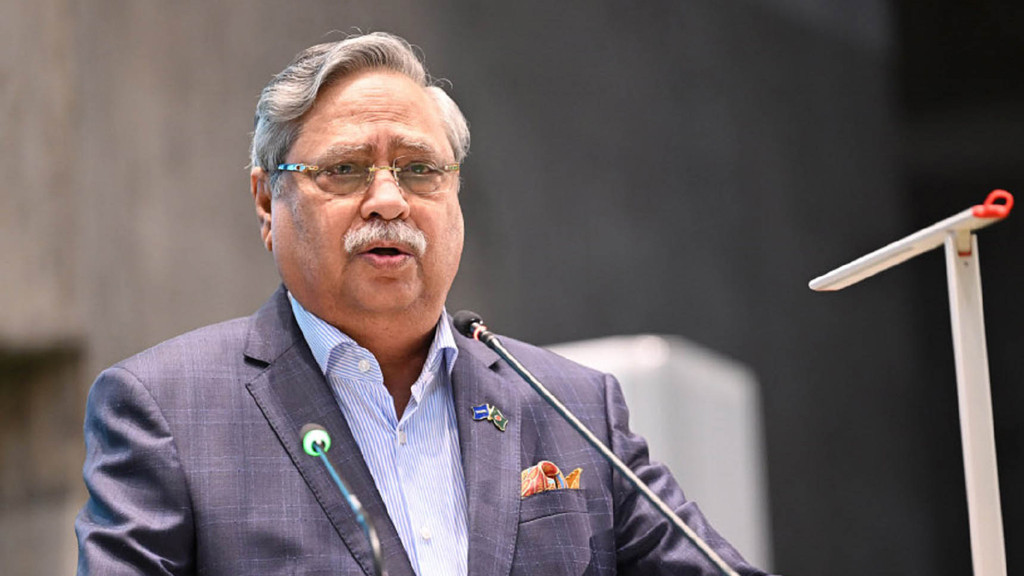
Bangladesh’s armed forces are to be modernized into a "four-dimensional," technology-driven force to counter rapidly evolving security challenges, including cyberattacks and artificial intelligence-based risks, the country’s president has announced.
President Mohammed Shahabuddin said the shift was part of a new "Bangladesh First" defence policy designed to bolster national security, deterrence capability, and tactical preparedness.
Addressing the 51st founding anniversary of the President Guard Regiment (PGR) at Dhaka Cantonment on Sunday, Mr Shahabuddin warned that the global security landscape was shifting away from traditional warfare.
"The concept of security is changing rapidly around the world, and new threats have emerged alongside conventional security risks," he said.
"There is no alternative to strengthening technology-driven capabilities, intelligence analysis, effective strategies and constant preparedness to address these challenges."
The "four-dimensional" military strategy is expected to expand the military's traditional land, air, and sea capabilities into the digital and cyber domains, where state and non-state actors increasingly deploy hybrid warfare tactics.
Security vs Public Access
The PGR is an elite, specialized unit of the Bangladesh Army tasked with protecting the President, the Prime Minister, and visiting foreign dignitaries.
While stressing that the safety of state leaders is closely tied to "national prestige," President Shahabuddin issued a rare reminder to the elite guard: their security protocols must not isolate leaders from the citizens they govern.
He urged personnel to prioritize protection "while ensuring that security arrangements do not hinder their normal interaction and communication with the public."
The warning highlights a long-standing tension in Bangladesh between the stringent, often disruptive security cordons surrounding VIPs and the public's access to their leaders.
Political Symbolism and Rebuilding
The President’s address carried significant political weight, referencing key figures from across Bangladesh's historically polarized political spectrum—a move observers see as an effort to foster national unity following recent political upheavals.
Mr Shahabuddin paid tribute to late President Ziaur Rahman, noting that the PGR developed into its modern form under his leadership. He also acknowledged the role of former Prime Minister Begum Khaleda Zia, the leader of the Bangladesh Nationalist Party (BNP), in the professional development of the regiment.
Significantly, the President also paid homage to those killed during the July-August 2024 mass uprising, which led to the dramatic ouster of the former Awami League government and initiated a period of transitional governance.
To ensure the military remains robust during this transition, the President called for tighter operational coordination between military intelligence, civil law enforcement, and government ministries.
"Implementation of these policies and initiatives will enhance the overall capability and efficiency of the armed forces," Mr Shahabuddin said, adding that a highly disciplined military remains cornerstone to the nation's stability.