Gene Banks Are Essential for Biodiversity Conservation and Food Security
The genetic diversity of plants is inextricably linked to the world's overall plant biodiversity. This is particularly true of agricultural biodiversity, which is directly connected to our food supply. It forms the very foundation of our food system. Without adequate agricultural biodiversity, our entire food system could quickly collapse.
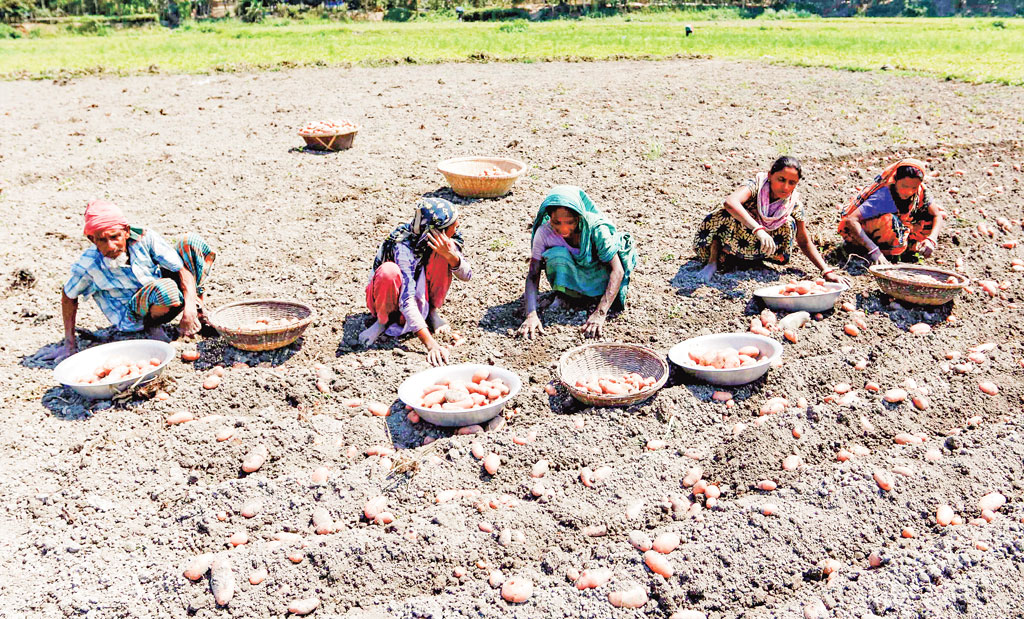
A striking example is the Great Irish Famine of 1847. The famine began in 1845 and lasted until 1852. Among those years, 1847 was the most devastating and became known as "Black '47." The catastrophe was caused by a potato disease known as late blight, or potato blight. The disease, caused by a fungal pathogen, rapidly rotted potatoes in the fields. At the time, potatoes were the staple food of the Irish people. As a result, nearly 400,000 people died in Ireland in 1847 alone. Throughout the famine, approximately one million people lost their lives, while many others left the country. Consequently, Ireland's population was reduced by nearly half. Had a potato variety resistant to late blight been developed and cultivated at the time, so many lives might not have been lost. Such a variety—or at least the genes for one—may well have existed somewhere in Ireland's natural environment, unknown to scientists. Today, potato varieties resistant to late blight have been developed, but those who perished can never be brought back.
Maintaining genetic diversity through gene banks helps prevent such catastrophes. Moreover, advances in plant science make it possible to develop crops with greater resilience to climatic stresses, enabling them to withstand drought, floods, salinity, and other environmental challenges. In addition to improving stress tolerance, these crops can also be enriched with enhanced nutritional value. Although crop production and yields per hectare have increased significantly in Bangladesh, the country has yet to develop a sufficient number of climate-resilient and nutrient-rich crop varieties.
In the wetlands of Gopalganj, there is an indigenous rice variety that is resistant to ufra disease. Yet Japan searched across the world for a gene with this trait in order to develop disease-resistant rice varieties, because the nematode-borne ufra disease was one of the major challenges facing rice cultivation there. I do not know how many of Bangladesh's vast genetic resources of indigenous rice have been preserved in gene banks. If these genetic resources are conserved, their exchange and use make it much easier to develop new crop varieties with desirable characteristics.
According to available information, the gene bank at the International Rice Research Institute (IRRI) in the Philippines holds 130,000 rice accessions, or germplasm samples. The Bangladesh Rice Research Institute's gene bank contains more than 9,000 germplasm samples. The Bangladesh Agricultural Research Institute and the Bangladesh Fisheries Research Institute also maintain gene banks. More recently, a National Gene Bank has been established under the National Institute of Biotechnology at Ganakbari in Savar. The facility will preserve the genetic resources of plants, animals, and microorganisms. The Ministry of Science and Technology established the gene bank to collect, conserve, and facilitate research on germplasm for future generations.
The world's largest seed bank is located in Norway and is known as the Svalbard Global Seed Vault. It serves as a long-term repository for backup copies of seeds collected from around the world. As of June 2025, the vault contained 1,355,591 seed samples, representing more than 13,000 years of agricultural history.
Today, none of us knows what hidden treasure may lie within a neglected handful of seeds kept by a farmer. Only scientists can unlock that mystery. It is entirely possible that a tiny grain of rice or a mustard seed contains a gene that could one day help secure global food security. But what if a devastating disaster were to destroy every rice seed on Earth? What would farmers cultivate in the future? Where would they obtain rice seed? We must remember that losing a variety or a seed does not merely mean losing a name; it also means losing countless genes carrying valuable traits. If those seeds are safely preserved in secure gene banks, cultivation can begin again from those very reserves. That is why gene banks are the key to future food security and biodiversity conservation.
Why should we invest in establishing and maintaining gene banks? Many people ask this question. Is it not a luxury? The answer is simple. If we want to preserve biodiversity—not only in Bangladesh but across the world—this is the first step. There is no guarantee that the species and varieties that exist on Earth today will still exist tomorrow as climate change continues to intensify. Much is said today about hybrid crops, yet they are fundamentally derived from the indigenous varieties and germplasm of different crops found in this country. New crop varieties cannot be manufactured like nuts and bolts in a factory. Escalating climate-related disasters, population growth, geopolitical instability, and wars have all placed biodiversity and food security at risk. Preserving and properly utilizing the genes of crops and livestock is therefore essential—not only for today's needs but also for sustaining agricultural and livestock diversity in the future, while protecting our food security, environment, nature, and ecosystems. It is important to remember that gene banks are not merely scientific assets; they are critical national infrastructure capable of safeguarding hundreds of thousands of genetic resources. A single gene from one of these germplasm collections could save us from a catastrophe like the Great Irish Famine.
Gene banks preserve the genetic resources needed to develop crop varieties capable of withstanding drought, salinity, waterlogging, floods, flash floods, cold waves, insect pests, plant diseases, and many other adverse conditions. The vulnerability of a single crop or plant species can trigger a disaster in any country at any time. Investing in gene banks is therefore a long-term public welfare initiative aimed at addressing future food crises and protecting the environment. For this reason, I believe the government and development partners should work together and invest in this sector through meaningful partnerships. My hope is that the National Gene Bank will become fully operational and function at full capacity. It should also be integrated with all domestic and international institutional gene banks. Bangladesh should likewise establish separate gene conservation programs for forest resources and non-crop plant species, particularly those that have already been identified as endangered or threatened with extinction.
Professional expertise is crucial in the establishment, operation, and management of gene banks. Specialized capacity must be developed in this field. Otherwise, even a minor mistake or administrative lapse could result in the irreversible loss of valuable genes or germplasm. Every gene bank must maintain duplicate copies of all preserved samples as backups, ensuring that no genetic resource is permanently lost in the event of an accident or disaster. I hope those concerned recognize the importance of this issue and contribute to strengthening the National Gene Bank. Bangladesh must also continuously collect and conserve samples from its vast reservoir of biodiversity while building a comprehensive digital database of these genetic resources. Only then will our biodiversity be preserved for future generations and our food security remain assured.
Author: Agriculturist and Environmental Expert