
Mirza Fakhrul Islam Alamgir: From Municipality Chairman to President
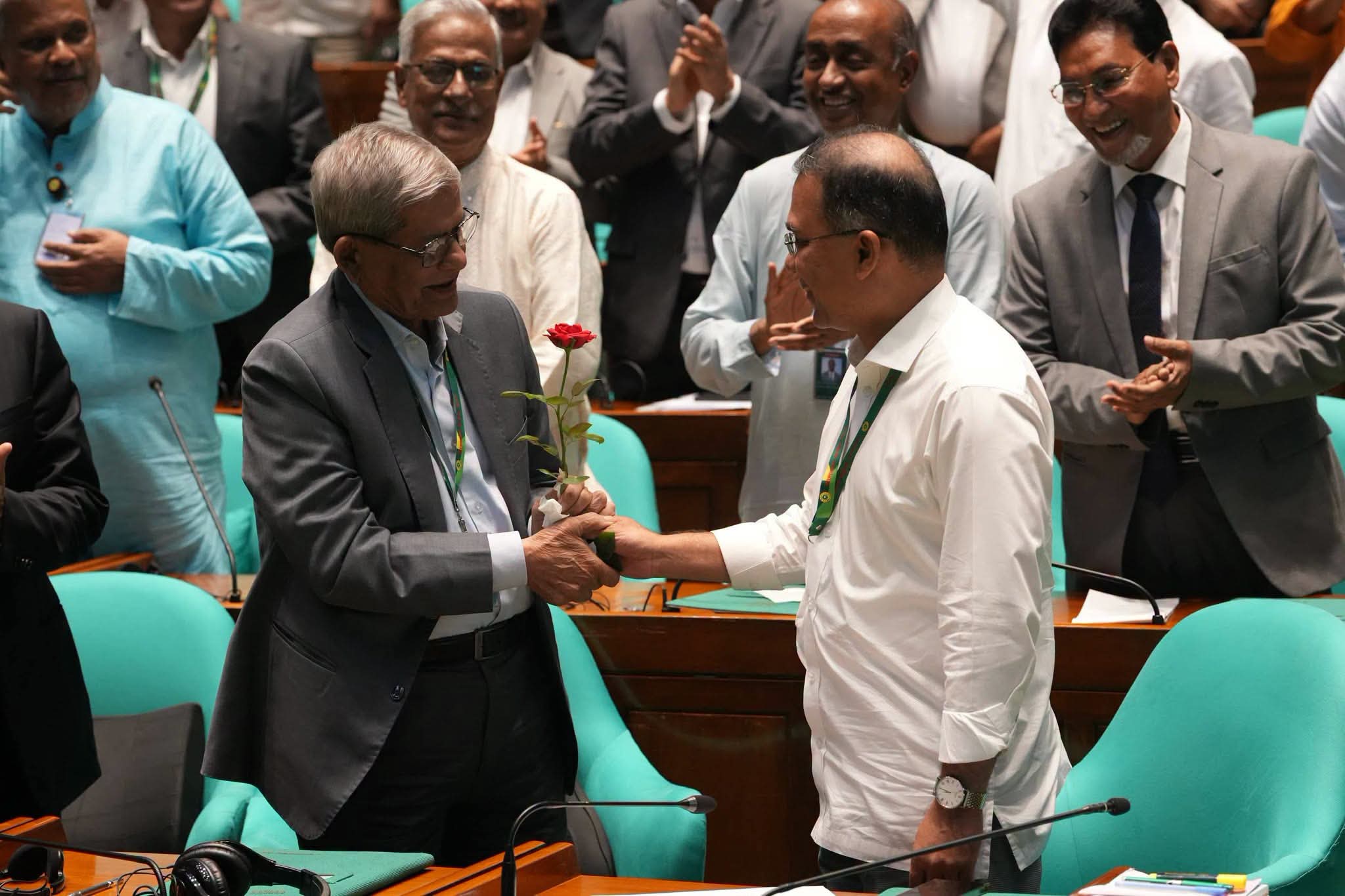
Mirza Fakhrul Islam Alamgir has been elected the 23rd president of Bangladesh, marking the culmination of a long political journey that began in student politics, passed through teaching and local government, and eventually took him to the leadership of the country’s main political party.
In Thursday’s presidential election, Mirza Fakhrul, the candidate nominated by the Bangladesh Nationalist Party (BNP), secured 255 votes. His rival, Colonel (retd) Oli Ahmed, the candidate of the Jamaat-led 11-party alliance, received 88 votes. The election was the first contested presidential poll in Bangladesh in 35 years.
With his election, Mirza Fakhrul became the 23rd president of Bangladesh in terms of presidential tenure count and the 19th individual to hold the office.
His journey to Bangabhaban has been long and varied. From a childhood in Thakurgaon and a career as an economics teacher to becoming a municipality chairman, state minister, BNP secretary general and one of the party’s most prominent political figures, Mirza Fakhrul has spent decades in public life.
Early life and family
Mirza Fakhrul Islam Alamgir was born on January 26, 1948, in Thakurgaon district. His father, Mirza Ruhul Amin, was a lawyer and was elected a member of parliament multiple times from Thakurgaon before and after Bangladesh’s independence. He was also involved in BNP politics in independent Bangladesh. His mother is Mirza Fatema Amin.
Mirza Fakhrul completed his higher secondary education at Dhaka College before earning bachelor’s and master’s degrees in economics from the University of Dhaka.
Politics was already deeply rooted in his family. His uncle Mirza Golam Hafiz was a senior BNP leader, former minister and the fourth speaker of the Jatiya Sangsad. During the presidency of Ziaur Rahman, he served as land minister and later became speaker of the second parliament. He subsequently served as minister for law, justice and parliamentary affairs.
Another uncle, Wing Commander S R Mirza, was appointed director of the Directorate of Youth Camp under the Mujibnagar Government in April 1971.
From teaching to politics
After passing the BCS examination in 1972, Mirza Fakhrul joined the education cadre and began teaching economics at Dhaka College. He later taught at several government colleges. Alongside teaching, he also worked as an auditor at the Bangladesh government’s Directorate of Inspection and Audit.
In 1979, during the rule of Ziaur Rahman, he was appointed personal secretary to then Deputy Prime Minister S A Bari. He remained in the position until Bari resigned after Hussain Muhammad Ershad came to power in 1982.
Mirza Fakhrul subsequently returned to teaching and served as a professor of economics at Thakurgaon Government College until 1986.
His involvement in politics, however, had begun much earlier.
While studying at the University of Dhaka, he became active in student politics. He was a member of the then East Pakistan Students Union, now Bangladesh Students Union, and was elected general secretary of its S M Hall unit. During the 1969 mass uprising, he served as president of the organisation’s University of Dhaka unit.
From municipality chairman to parliament
Mirza Fakhrul left the teaching profession in 1986 ahead of municipal elections. After contesting the 1988 election, he was elected chairman of Thakurgaon Municipality.
He later joined BNP during the movement against Ershad’s military government. In 1992, he was elected president of the BNP’s Thakurgaon district unit and simultaneously served as vice-president of the Bangladesh Jatiyatabadi Krishak Dal.
He contested the 1991 fifth and 1996 seventh Jatiya Sangsad elections from Thakurgaon-1 as a BNP candidate but lost both times to Awami League candidate Khademul Islam.
His breakthrough in national electoral politics came in the 2001 eighth parliamentary election. Contesting from Thakurgaon-1, he defeated Awami League’s Ramesh Chandra Sen with 134,910 votes and was elected to parliament.
In November 2001, he joined Khaleda Zia’s second cabinet. He first served as state minister for agriculture and later as state minister for civil aviation and tourism, remaining in government until October 2006.
He lost to Ramesh Chandra Sen again in the 2008 ninth parliamentary election.
In the 2018 eleventh parliamentary election, Mirza Fakhrul received BNP nominations for both Thakurgaon-1 and Bogura-6. He was elected from Bogura-6 but subsequently did not take oath, prompting the Election Commission to declare the seat vacant and hold a by-election.
Rise within BNP
Mirza Fakhrul’s rise within BNP accelerated during the 2000s.
At the party’s fifth national council in December 2009, he was elected senior joint secretary general. As the Awami League formed the government around the same period, he increasingly emerged as one of BNP’s principal public faces and became widely known as a spokesperson for the opposition.
Following the death of BNP secretary general Khandakar Delwar Hossain on March 20, 2011, BNP Chairperson Khaleda Zia appointed Mirza Fakhrul acting secretary general. The appointment initially generated discussion within the party, but Khaleda Zia reaffirmed it the following day.
Five years later, on March 19, 2016, he was formally elected BNP secretary general at the party’s sixth national council.
As the opposition party’s secretary general, Mirza Fakhrul became one of the most recognisable figures in Bangladesh’s political arena. He was vocal on issues including the demand for restoration of the caretaker government system and led BNP programmes and protests in different parts of the country.
He also served as minister of local government, rural development and cooperatives in the Bangladesh government.
Years of cases, arrests and political struggles
Over the past one and a half to two decades, Mirza Fakhrul emerged as one of the principal driving forces of BNP. His political career was also marked by numerous criminal cases, arrests and periods of imprisonment.
According to accounts of his political career, he faced more than 100 cases, including allegations related to vandalism, obstruction of police work, sabotage and bomb attacks. BNP and his lawyers have consistently maintained that the cases were politically motivated and intended to put pressure on the opposition.
He was jailed at least 11 times and spent around three and a half years in prison over the course of his political life. During political movements between 2012 and 2015, he was detained several times for extended periods.
On March 29, 2016, the day after he was elected BNP’s full secretary general, he was sent to jail in an old case.
His detention continued to feature prominently in his later political career. In December 2022, shortly before a divisional rally, he was taken from his Uttara residence late at night. In October 2023, the day after a rally, detective police arrested him at dawn. He subsequently spent more than three and a half months in jail.
Despite age-related health problems, heart complications and other physical challenges, Mirza Fakhrul continued his political activities and spent extended periods in custody.
He also faced tear gas, sound grenades and attacks on his motorcade while attending rallies and political programmes.
A new destination
For decades, Mirza Fakhrul’s political identity was closely associated with the BNP and its struggle as an opposition force. From the streets of Thakurgaon and the corridors of Dhaka College to parliament, the cabinet and the leadership of BNP, his career has passed through several distinct stages.
His election as president now marks a dramatic transformation in that political journey.
The man who once served as chairman of Thakurgaon Municipality and later became a BNP state minister, opposition spokesperson and party secretary general has now been chosen by the country’s lawmakers to occupy the highest constitutional office.
Mirza Fakhrul is married to Rahat Ara Begum, who studied at the University of Calcutta. The couple have two daughters. Their elder daughter, Mirza Shamaruh, studied at the University of Dhaka, later taught there and is currently working in Australia as a postdoctoral fellow. Their younger daughter, Mirza Safaruh, also studied at the University of Dhaka and is now teaching at a school in Dhaka.
After decades of political activity, arrests, court appearances, parliamentary contests and party leadership, Mirza Fakhrul Islam Alamgir has reached the country’s presidency.
His election on Thursday, with 255 votes, has added a new and perhaps most consequential chapter to a political career spanning more than five decades.
Topics:
BNPTarique RahmanBangladesh Nationalist PartyelectionMirza Fakhrul Islam Alamgirpresidential electionBangabhaban