10 Years After Holey Artisan Attack: No Major Militant Activity but Extremist Threat Persists
- The case is currently pending settlement in the Appellate Division
- Although their network has been shattered through a series of operations, the existence of militants has not been completely eliminated.
- The government states that some extremist groups still remain.
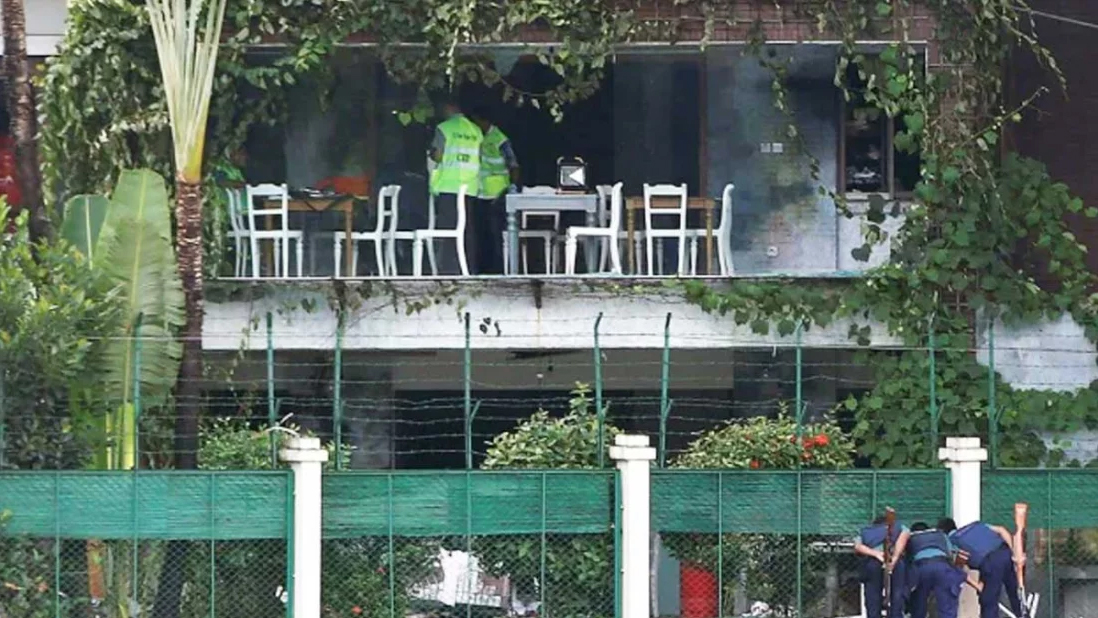
Ten years after the 2016 Holey Artisan Bakery attack in Dhaka’s Gulshan, Bangladesh’s law enforcement agencies say militant networks have been significantly weakened but not fully eradicated. Although no major attacks have occurred in recent years, police and other agencies have stepped up surveillance over fears of regrouping and possible attacks on sensitive installations.
The deadliest militant attack in Bangladesh took place on the night of 1 July 2016, when armed attackers stormed the Holey Artisan Bakery in Gulshan 2. Twenty people, including Bangladeshi and foreign men and women, were killed. Seventeen of them were citizens of Italy, Japan, India and the United States. Two police officers were also killed while on duty. The siege ended the following morning after an army commando operation in which five militants were killed.
Police say sustained operations after the Holey Artisan attack dismantled much of the leadership and organisational structure of several militant groups. Law enforcement agencies have nevertheless increased surveillance at key installations and sensitive areas amid concerns that such organisations may be trying to reorganise.
Police sources said recent incidents involving white flags being put up in different parts of the capital were discussed at senior levels of the police force. Last week, a crime conference at Police Headquarters, chaired by Inspector General of Police Ali Hossain Fakir, also discussed militancy. The meeting instructed officials not to tolerate processions under the banner of militant organisations and ordered swift legal action against those involved, alongside stricter surveillance of such groups.
Sources said more than 300 accused in militancy-related cases were released on bail after the fall of the Awami League government in the mass uprising of 5 August 2024. Law enforcement officials said some of those released during the previous interim government later tried to become active again. After the election, a BNP-led government took office in February last year. Although no major militant activity has surfaced, security was tightened at important installations and airports over fears of possible attacks.
In April, a police headquarters alert said members of a banned extremist organisation could be planning attacks on important installations, including the National Parliament building.
The Counter Terrorism and Transnational Crime, or CTTC, unit of police believes militant leadership structures have been largely broken, but the network has not completely disappeared. A senior CTTC official said at least five people linked to an extremist organisation had been detained over the past two months on allegations of planning attacks on key installations across the country.
The government, however, maintains that there is no militant activity in the country. Home Adviser Salahuddin Ahmed said at a recent event that he does not recognise the term “militant”. He said some extremist groups exist, as in many countries, but added, `During the fascist period, these groups were used as tools for political gain. At present, they have no existence in Bangladesh.’
RAB’s Director of Legal and Media Wing and spokesperson MZM Intekhab Chowdhury told Ajker Patrika that signs of extremist activity had recently been found in several incidents. He said RAB was seriously investigating any evidence of such activity and was making its utmost effort to prevent extremism and all forms of sabotage.
The Holey Artisan attack case is still awaiting disposal in the Appellate Division. On 27 November 2019, Dhaka’s Anti-Terrorism Special Tribunal sentenced seven members of ‘Neo JMB’ to death. On 10 October 2023, after hearings on the death reference, appeals and jail appeals, the High Court commuted the death sentences of all seven to life imprisonment until death.
A full copy of the High Court verdict was published on 17 June last year, after which the convicts filed appeals with the Appellate Division. Attorney General Ruhul Quddus Kazal told Ajker Patrika, ‘We take necessary initiatives for the speedy disposal of important cases. There will be no shortcoming on our part in this case either.’
The original Holey Artisan Bakery at House 5, Road 79 in Gulshan 2 no longer operates. The owner’s family now lives there. A security guard at the adjacent Lake View Clinic said the house would be opened for limited hours on wednesday to mark the anniversary, with preparations under way for visits by police and diplomatic representatives. Members of the public are not allowed to enter.
A new Holey Bakery was later opened at 150/3 near Gulshan-2 Circle, but the government at the time did not allow the restaurant to operate under that name for more than a year. It was later renamed Oro Bakery, and it continues under that name.
At the restaurant on Tuesday afternoon, local and foreign customers were seen dining and collecting takeaway orders. Manager Abu Sayeed told Ajker Patrika that he had also worked at the Holey Artisan restaurant on Road 79 and had witnessed the horror of that night. ‘I could have died that day too,’ he said.