US Strikes Iran as Tehran Launches Retaliatory Attacks on American Facilities
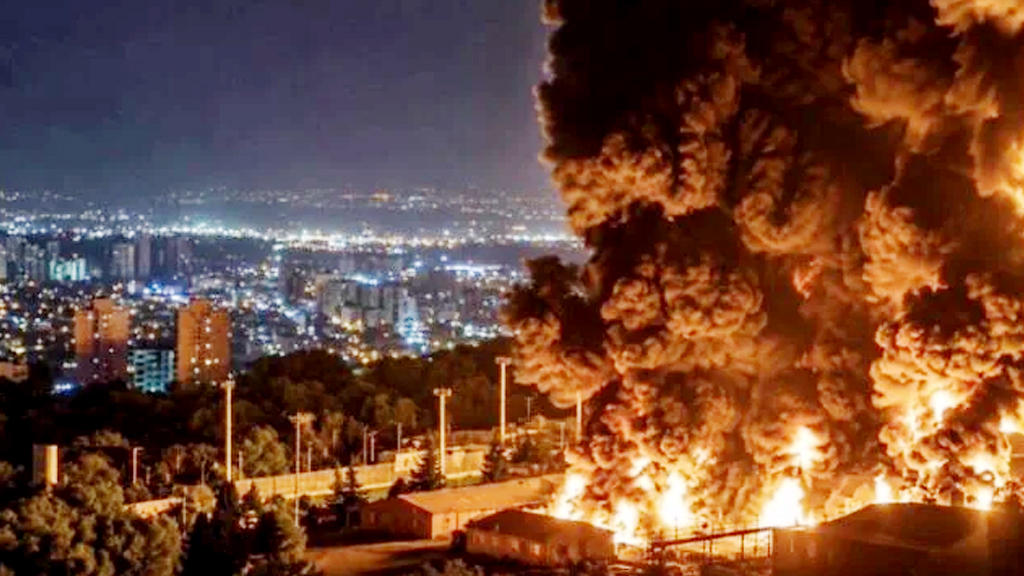
The United States carried out extensive airstrikes in Iran on Tuesday night local time, while Iran responded by targeting multiple US military facilities across the Middle East. The escalation, described as the most serious in weeks, has pushed up global energy prices and increased pressure on US President Donald Trump’s popularity.
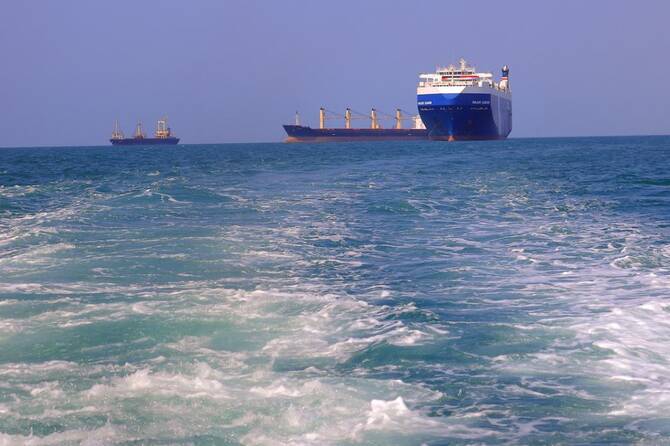
Reuters reported that the attacks followed reciprocal strikes earlier this week, marking the first direct exchange of attacks between the United States and Iran since July. Two oil tankers leaving the Strait of Hormuz were also attacked on Monday.
Iran has effectively closed the Strait of Hormuz, a key global oil shipping route, to vessel traffic. Crude oil prices rose by more than $4 per barrel on Tuesday, ending at their highest level in five weeks.
Tehran launched retaliatory attacks on US facilities in Jordan, Bahrain and Iraq, while warning that it would prevent oil exports from the Gulf region. Trump had earlier threatened Iran with a “very severe” attack, while US Treasury Secretary Scott Bessent said Washington was preparing to impose new sanctions on Tehran.
Iran’s Red Crescent said a US strike on a wedding ceremony near Sirik, a coastal area close to the Strait of Hormuz, killed five people and injured 50 others. Mehr News Agency reported that a four-year-old child was among those killed.
IRNA, Iran’s state news agency, cited a provincial official as saying that 68 people had been injured. The United States did not immediately comment on the reports.
Iran’s Islamic Revolutionary Guard Corps, or IRGC, said the US strikes would make the “lock on the Strait of Hormuz tighter.” Before the war, one in every five barrels of global oil supply was transported through the waterway.
Iranian Parliament Speaker Mohammad Bagher Ghalibaf was quoted by Iranian media as saying: “If the enemy wants us not to export oil from the Persian Gulf, then no one will be able to export oil.”
Threats of attacks and new economic sanctions have so far failed to bring any significant change in Tehran’s position. Iran has faced severe economic sanctions for nearly half a century.
Conditions had remained comparatively calm for almost a month before Tuesday’s US strikes. The United States and Iran had largely avoided direct attacks during that period, although both sides continued to issue strong and threatening statements.
US Central Command said it had completed a phase of strikes against targets linked to Iran’s Islamic Revolutionary Guard Corps on Tuesday. The targets included air defence systems, radar systems, maritime military assets and facilities, mine-laying and explosives-deployment capabilities, and communications systems.
Iranian media reported multiple strikes in several parts of the country, including a US missile attack near Ahvaz and an attack on the civilian Jiroft Airport in southeastern Iran.
Explosions were also reported in Chabahar, the southeastern port city; Bandar Abbas, a port city on the Strait of Hormuz; and Asaluyeh, a major gas hub on the Gulf coast. Iranian state television reported explosions on Qeshm Island, on the northern side of the Strait of Hormuz.
Trump had warned Iran against retaliating for Tuesday’s strikes, saying the United States would launch attacks that were “far more severe and at a much higher level” if Tehran responded.
Trump wrote in a social media post: “But this will not be the biggest attack. The biggest attack is yet to come and when it is over there will be very little left of the Islamic Republic of Iran!”
The IRGC subsequently said it had launched a large-scale ballistic missile attack on a US base in Jordan, claiming that a “large number of US soldiers” had been killed.
Two US officials told Reuters that there had been no reports of casualties so far from Iran’s attack on US facilities in Jordan. The officials said the information was preliminary and could change as Iranian attacks continued.
Iranian media also reported that Iranian forces launched a major drone attack on a US base in Bahrain. Kuwait’s military said its air defence systems were taking precautionary measures against a hostile drone attack.
Jordan’s armed forces said air defence systems responded to 13 ballistic missiles that entered the country’s airspace. Ten missiles were destroyed in the air, while three landed in uninhabited areas.
Bahrain said it detected and destroyed drones launched by Iran.
The IRGC said its ground forces carried out coordinated missile and drone attacks on US bases in Erbil, northern Iraq. The force claimed to have destroyed a repair centre, several warehouses holding technical equipment and a system controlling a US surveillance balloon.
The IRGC also claimed that fuel tanks caught fire in the attack and that several US soldiers were killed. Neither Iraq nor the United States confirmed the reported attack.