
Hezbollah rejects deal with Israel, which expects 'extended stay' in Lebanon
Hezbollah leader Naim Qassem on Saturday accused the Lebanese government of surrendering sovereignty in its agreement with Israel and declared the deal null and void, as Israel told its troops to prepare for an "extended stay" in Lebanon.
The agreement, which includes a process aimed at disarming Hezbollah, was signed in Washington on Friday after five rounds of talks.
While Qassem attacked the deal, Israeli Defence Minister Israel Katz insisted that the country's troops would be able to stay in Lebanon so long as Hezbollah remained armed.
He said he had instructed Israeli troops "to prepare for an extended stay" in southern Lebanon and that "there will be no redeployment by Israel in southern Lebanon, no withdrawal, as long as the terrorist organisation Hezbollah is not disarmed throughout Lebanon".
Lebanon was drawn into the regional war on March 2 when Tehran-backed Hezbollah fired rockets at Israel to avenge the killing of Iran's supreme leader in US-Israeli strikes.
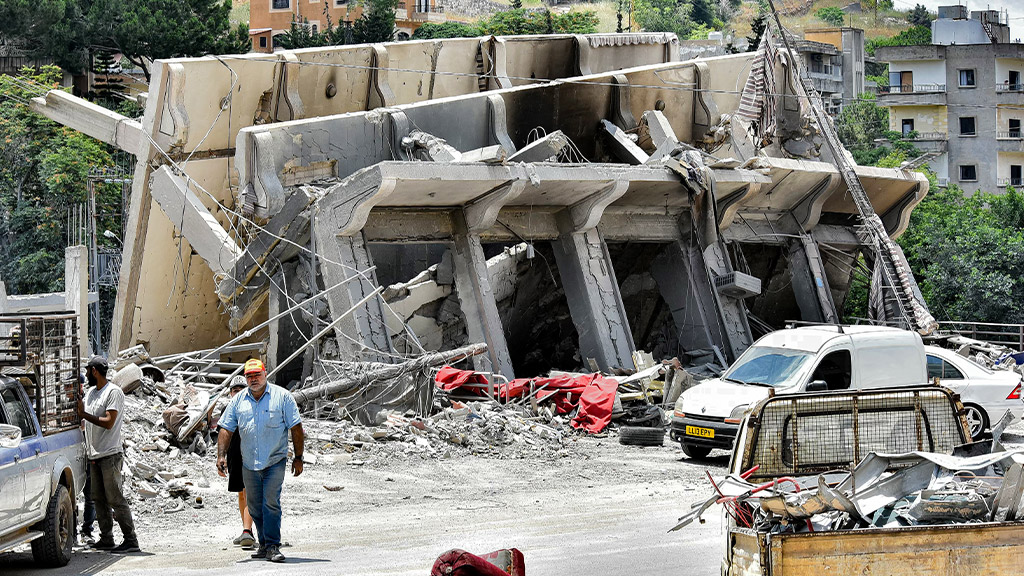
Israel responded with heavy airstrikes and an invasion of southern Lebanon, where its troops occupy swathes of territory and have been carrying out extensive demolitions of homes and other buildings.
Iran insists any deal to end the broader war must include Lebanon, while the Lebanese government has repeatedly tried to separate the negotiating tracks.
Katz on Saturday said they will use "great force" against Iran if it "tries to attack Israel to prevent the implementation of the agreement" with Lebanon.
Hezbollah's Qassem, also speaking on Saturday, called the agreement "humiliating, shameful, and a surrender of sovereignty".
"This agreement is null and void, and the provisions of the Iranian-American memorandum of understanding must be implemented," he said, referring to the deal between the two powers to end the broader Middle East war, which includes a ceasefire in Lebanon.
Qassem accused Lebanese authorities of committing a "grave blunder" and "legitimising the continuation of the (Israeli) occupation for many years," which "may even lead to the annexation of these lands".
'Humiliating and shameful'
Hezbollah supporters took to the streets of Beirut on Friday night to protest the framework.
In western Beirut's Hamra street, 48-year-old Ahmad Shamas told AFP on Saturday that "the agreement reached is a humiliating and shameful one".
Another local, Husam Beiruiti, 43, wasn't ready to write the agreement off, and said he saw no other solution.
"I don't think it will stop the Israeli aggression... Let's wait and see what this agreement achieves," he added.
Hezbollah has opposed the direct negotiations between Lebanon and Israel, which have been ongoing since April.
An April 17 ceasefire failed to stop the fighting, but the violence has decreased since the US and Iran reached their memorandum of understanding last week.
The Israeli military said on Saturday that it had targeted "suspected terrorists" who posed a threat to its soldiers in southern Lebanon, and Lebanese state media reported strikes in the south.
Lebanese President Joseph Aoun called the Washington agreement "a first step" towards restoring his country's sovereignty.
According to the text of the deal shared by the US State Department, Lebanon and Israel, officially at war for decades, expressed their intent to "conclusively end the conflict, address its underlying causes, and to therewith formally conclude any state of war between them".
The agreement sets up a process during which Lebanon's military is due to "restore effective sovereign authority over all Lebanese territory, pending the verified disarmament of non-state armed groups".