
Indian Courts, Not Government, Will Decide Sheikh Hasina Extradition, Say Senior Officials
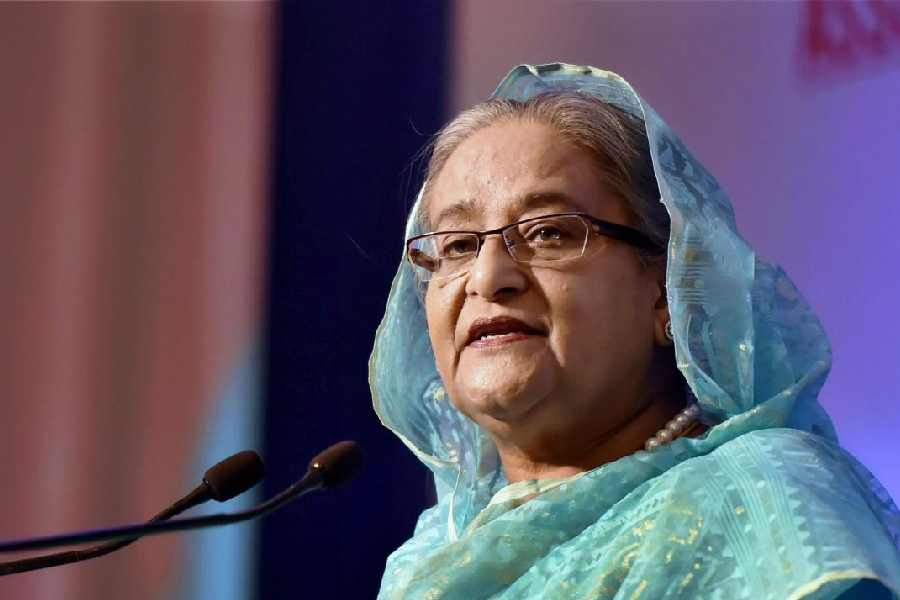
Senior Indian government officials have said Bangladesh’s renewed request to extradite deposed former prime minister Sheikh Hasina will have to be placed before India’s judiciary, with the final decision resting with the courts rather than the government.
A senior Indian official, speaking to The Indian Express on condition of anonymity, said, “The decision on extradition will ultimately be taken by our courts; it will not be a political or diplomatic decision. What will have to be established in court is whether the offences she is accused of are also classified as offences under Indian law.”
Officials also said extensive discussions were under way between Dhaka and New Delhi on moving away from a “maximalist” position, described as an attempt to secure all goals and demands in full without compromise or concession.
Another official said Sheikh Hasina had indicated that she planned to return to Bangladesh in December this year. At a press conference on 5 August, when asked when she wanted to return, she referred to Bangladesh’s 1971 Liberation War and said, “December is our month of victory, so I want to return in December.”
Sheikh Hasina faces a death sentence in Bangladesh, and her party, the Awami League, has been banned. One official said Delhi could not view the extradition request in isolation from the current diplomatic engagement between India and Bangladesh.
Earlier, when asked at a press conference about Bangladesh Prime Minister Tarique Rahman’s request for Sheikh Hasina’s extradition, the spokesperson for India’s Ministry of External Affairs said, “We are examining the matter in line with our established processes. If there is any update to share on this, I will let you know...”
Multiple Ministry of External Affairs officials told The Indian Express that Bangladesh had attached all necessary legal documents to its extradition request for Sheikh Hasina in accordance with the provisions of the extradition treaty signed between the two countries in 2013.
Since the mass uprising in Dhaka in August 2024, Sheikh Hasina has been receiving shelter and security at an undisclosed location in New Delhi for nearly two years. At a virtual press conference in Delhi on 5 August, she declared that she was “determined to return home.”
Deposed Awami League leaders and former members of parliament said Sheikh Hasina had remained in regular contact with party leaders and activists in Bangladesh while in informal shelter in India. They said she had also held direct meetings from time to time and regularly played table tennis. They added that the 78-year-old leader was planning to return to Dhaka toward the end of the year.
Diplomatic-level discussions on the sensitive issue are continuing. Dhaka has been pressing for Sheikh Hasina’s extradition on the basis of a death sentence handed down by the International Crimes Tribunal in November 2025. The ruling convicted her of “crimes against humanity”.
Awami League leaders said that if extradition proceedings begin in an Indian court, the International Crimes Tribunal verdict would be challenged on multiple grounds. One of the main arguments, they said, would be that the ruling was delivered during the tenure of Bangladesh’s interim government, when Muhammad Yunus was serving as head of government.
India signed an extradition treaty with Bangladesh in 2013. The treaty sets out an obligation to return persons who are accused of offences, have been convicted, or are required for the enforcement of a “judicially pronounced sentence”.
The treaty also states that where an extraditable offence is involved, the matter will be determined by the judicial authorities of the other contracting state. Article 6 of the treaty says offences of a “political character” will not be accepted. At the same time, it lists 12 offences that will not be treated as political in character, including murder, manslaughter, assault, use of firearms, abetment to murder and several other offences.
The provisions of India’s Extradition Act, 1962, are also significant in this case. The law lays down detailed procedures for the extradition of fugitive offenders from India and says the CPV Division — Consular, Passport and Visa — is the nodal authority for handling extradition matters.
Under the law, if the ministry considers it appropriate, taking into account the relevant provisions of any extradition treaty or arrangement, an inquiry magistrate may be appointed to investigate the case.
The law states, “If the inquiry magistrate is of the opinion that surrender of the fugitive criminal is fit on the basis of the request, the magistrate may report accordingly and recommend extradition.” Conversely, “if, after the inquiry into extradition, the extradition magistrate is of the opinion that no prima facie case is made out in support of the request of the foreign state, he shall discharge the fugitive criminal.”