
When Subsidies Collide: Why South Asia Needs Rules for Export Support?
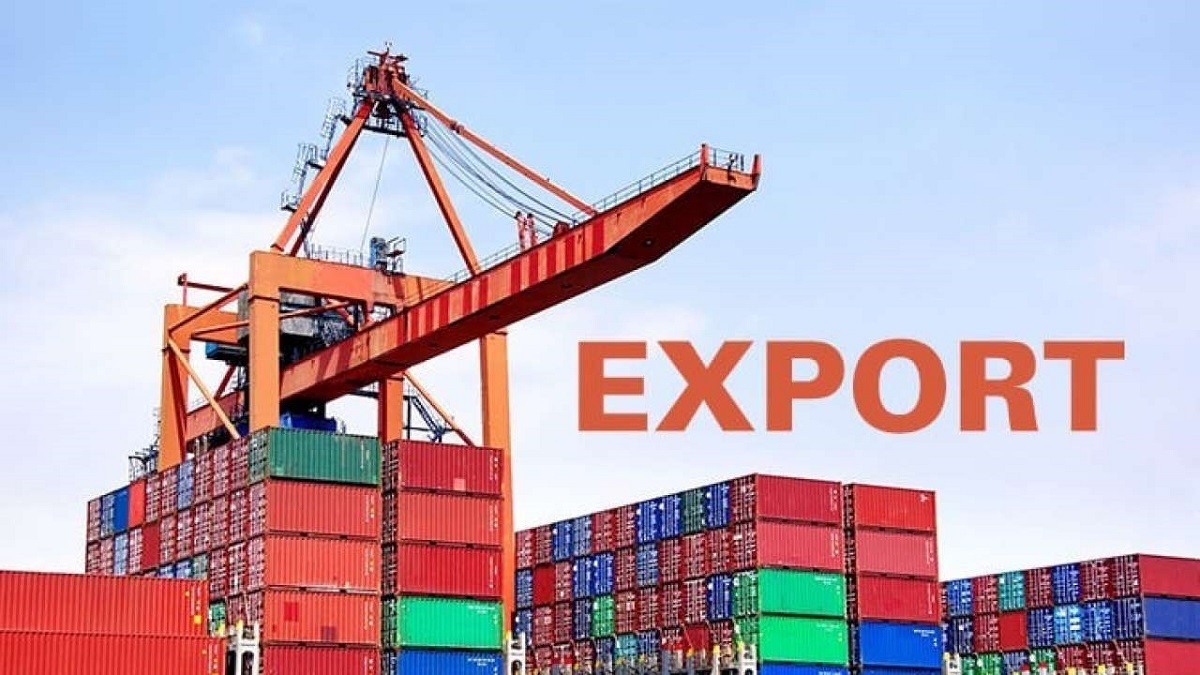
Islamabad has placed an expensive bet on itself, and its neighbours may end up paying the difference. In late July, Pakistan's Economic Coordination Committee approved a package of export-finance schemes worth up to $920 million in combined commitments, six-month working capital loans at a fixed 8.5 percent, decade-long project financing at rates as low as 2 to 5 percent, and cash rebates of 1 to 2 percent for exporters who grow their sales fastest.
Reports differ on the real annual cost, with some analysts putting the actual FY27 fiscal outlay closer to $320-360 million once multi-year commitments are separated out. Either way, the message to Nepal, Bangladesh and India is the same: when one country in the region sharply underwrites its exporters' borrowing costs, its neighbours' industries feel it and the response so far has been to compete, not coordinate.
None of this is unique to Pakistan. Bangladesh currently pays cash incentives ranging from 0.3 to 10 percent across 43 export sectors. Nepal's central bank offers concessional export credit, and Kathmandu recently cleared $35 million in long-pending incentive arrears even as it debates whether to bring back the cash-subsidy scheme it scrapped last year. India runs its own interest-support scheme for MSME exporters.
The instinct behind each of these programmes is reasonable, protecting exporters from unfair external cost advantages. The problem is that none of them are coordinated with each other, and in an overlapping neighbourhood exporting many of the same goods — textiles, leather, agro-processed products, that has a cost.
Three effects follow when subsidy levels diverge sharply between neighbouring exporters. Firstly, price gaps open up that reflect government support rather than efficiency: a Pakistani exporter borrowing at 2-5 percent competes unfairly against a Nepali or Bangladeshi rival paying market rates of 9-12 percent, regardless of who actually makes the better product.
Secondly, investment follows the subsidy rather than the fundamentals, a factory that might have opened in Bangladesh or Nepal is drawn instead to wherever financing is the cheapest. Thirdly, blanket interest subsidies and export-contingent rebates sit in a legally sensitive zone under WTO rules on prohibited subsidies, exposing smaller economies to dispute risk even when their own schemes are modest by comparison.
This is where my own research on Bangladesh's RMG-sector cash incentives is instructive: even a well-funded scheme, if left uncoordinated with what the rest of the region is doing, tends to reward firms for meeting compliance thresholds rather than for becoming genuinely more competitive. Scale that same logic to three or four countries responding to each other's subsidies in real time, and the region risks a race where the winner is decided by treasury depth, not industrial capability.
India's August 2026 amendment to its Foreign Trade Policy, allowing exporters to invoice and settle transactions in rupees outside the Asian Clearing Union, is a step toward deeper regional trade integration but it addresses currency friction, not the subsidy gap itself. New Delhi is better placed than either Kathmandu or Dhaka to convene a serious conversation on export-finance coordination, given its economic weight and its own stake in a stable, rule-based trading neighbourhood rather than a subsidy contest.
A modest, realistic starting point would have three parts. One, a rough ceiling ,even a non-binding benchmark, on the effective subsidy rate applied to intra-regional trade, so that no single country's exporters can gain an artificial edge purely from state support. Two, an annual, public accounting from each country of what it actually spends on export incentives and who receives it - a lighter-touch version of WTO notification requirements, calibrated for regional trust-building rather than legal enforcement. Three, a shared list of sectors — value-added agro-processing, pharmaceuticals, sustainable manufacturing these all three governments agree are worth supporting, so incentives build the region's export base rather than simply reshuffling it between neighbours.
Bangladesh's LDC graduation this November, and Nepal's request to defer its own, both turn on the same underlying question: can these economies compete without the cushions they have relied on? Uncoordinated subsidy competition with a larger neighbour makes that transition harder, not easier. A modest regional understanding on export finance would not end government support for exporters, nor should it. It would simply ensure that support builds real competitiveness instead of becoming, as it has in parts of Bangladesh's own experience, a permanent crutch that is hard to remove once industries come to depend on it. If left uncoordinated, the region risks paying for its own growth twice, once at the treasury, and again in the industries it quietly, let’s slip to whichever neighbour is willing to spend more to keep them.
Writer: Lecturer in BHM at AITM College, Kathmandu (Partner of the University of Highlands and Islands, Scotland). She holds an MBA in International Business from the University of Dhaka.