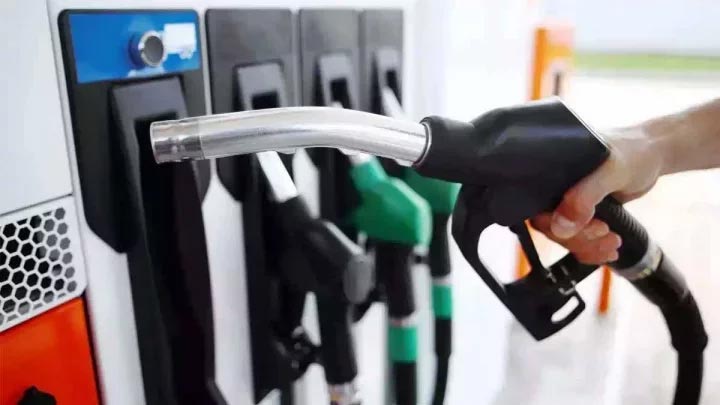
Bangladesh has increased the prices of all petroleum fuels by Tk20 per litre, taking fuel prices to their highest level in the country’s history and raising concerns about higher living costs, transport fares and inflation. The government said the increase was necessary to reduce the recent subsidy burden.
The price rise has prompted immediate concern and anger among consumers, particularly those directly dependent on fuel, including public transport operators. The impact is expected to extend beyond petrol stations, increasing costs across goods transport, agriculture, industry and electricity generation.
Fixed-income households fear that prices of essential commodities and overall living expenses will rise further. Real purchasing power could decline if incomes do not increase at a similar rate, while inflation may rise further, according to those concerned.
Experts said low- and limited-income groups could face the greatest pressure amid already high inflation. Extensive diesel use in buses, trucks and cargo vehicles is expected to raise transport costs and affect the supply and distribution of agricultural produce and other goods.
Farmers reliant on diesel-powered irrigation and agricultural machinery may also see production costs rise. Higher operating costs for generators, transport and machinery in factories could increase industrial production costs, while businesses may pass part of the additional expenses on to consumers.
Dr Fahmida Khatun, distinguished fellow at the private research organisation Centre for Policy Dialogue (CPD), told Ajker Patrika that higher fuel prices would raise costs in transport, agriculture, industry and business.
“The impact may gradually be reflected in the prices of rice, vegetables and other essential goods,” she said. “As a result, inflation may also rise. Higher production costs could undermine the competitiveness of domestic industries and investment. Low-income and fixed-income people will face the greatest pressure.”
Fahmida Khatun advised the government to set transport fares rationally, strengthen market monitoring and provide targeted support to poor households, farmers and small entrepreneurs. Fuel import taxes and other costs should also be reviewed, she said.
The government announced the Tk20-per-litre increase for all fuel types last Sunday, with the new prices taking effect after midnight that day. Diesel now costs Tk135 per litre, kerosene Tk155, petrol Tk160 and octane Tk165. The previous prices were Tk115, Tk135, Tk140 and Tk145 respectively.
International fuel prices fell by US$8 per barrel yesterday, equivalent to about Tk1,000 in local currency. One barrel of crude oil contains 159 litres. The government had followed a monthly fuel-price adjustment policy in line with international market prices for several years, but cited the need to reduce recent subsidy pressures for the latest increase.
Since the Bangladesh Nationalist Party (BNP) government took office in February, prices of the four fuels have increased by between Tk35 and Tk45 in three rounds over seven months. Although the government has repeatedly said it prioritises reducing inflation, the rate has not yet fallen to the desired level. Overall inflation stood at 8.26% at the end of August.
Bangladesh last implemented a major one-time fuel price increase in August 2022. Diesel prices then rose from Tk80 to Tk114 per litre, petrol from Tk86 to Tk130, and octane from Tk89 to Tk135. Overall inflation increased from 7.48% in July that year to 9.52% in August, although international market conditions, import costs, shipping charges and the dollar shortage were also cited as contributing factors.
The Bangladesh Petroleum Corporation (BPC) said fuel prices had been adjusted because import costs had risen amid high international oil prices for several months, resulting in losses. Some political parties and economists, however, questioned fuel-sector expenditure, pricing methods, taxes, duties and management transparency.
SM Nazer Hossain, senior vice-president of the Consumers Association of Bangladesh (CAB), described the government’s decision as short-sighted. “The government raised prices when international oil prices were falling,” he told Ajker Patrika. “Instead of acting hastily, it should have monitored the market for a few more days. The issue of salary increases for 1.8 million government officials and employees should also have been considered. If the government tries to offset the additional liability by raising fuel prices, the impact will fall on 180 million people.”
SM Nazer Hossain said BPC was currently a profitable organisation and should focus more on reducing system loss, irregularities and corruption rather than raising fuel prices.
Md Fazlul Haque, administrator of the Federation of Bangladesh Chambers of Commerce and Industry (FBCCI), said the price of diesel, known as the “fuel of the poor”, had been raised abnormally.
“During a period of high inflation, this will place further pressure on low-income people,” he said. “Business costs will also rise because of transport expenses.” He said the fuel price increase would become “a blow to the wounded” while gas and electricity conditions remained unresolved.
Dr Zahid Hussain, former lead economist at the World Bank’s Dhaka office, said the government had no alternative to raising fuel prices. The government would either have to provide subsidies, the burden of which would ultimately fall on the public, or borrow from the banking system, which could increase inflation, he said.
Dr Zahid Hussain said the government must ensure that prices of other goods are not increased unjustifiably on the pretext of higher fuel prices. Bangladesh Bank should also reconsider moving away from its contractionary monetary policy, he added.
The increase could provide some relief from government fiscal pressure, but it risks raising household expenses, particularly for low-income families, farmers, transport workers, small traders and limited-income middle-class households, Zahid Hussain said.