US Strikes Oil Tanker in Hormuz, Hits Tehran for First Time as Iran Targets Bahrain–Kuwait
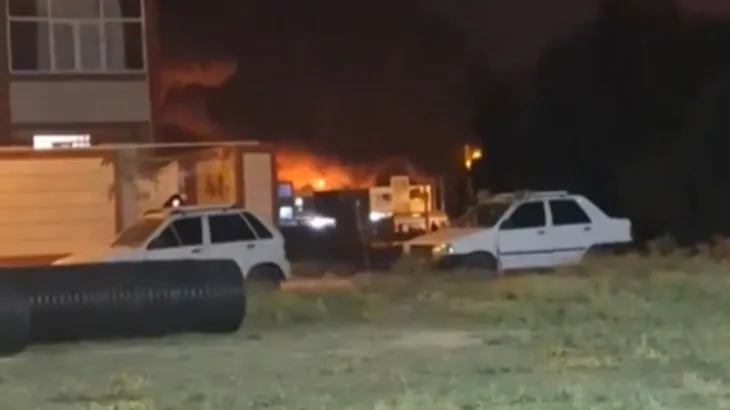
The United States struck an empty oil tanker heading towards Kharg Island in the Hormuz Strait and launched fresh attacks on Iranian military sites, including Tehran for the first time, while Iran retaliated by targeting Bahrain and Kuwait, according to a Reuters report published on Thursday. The escalation followed the effective collapse of a ceasefire and has intensified fears of a broader war.
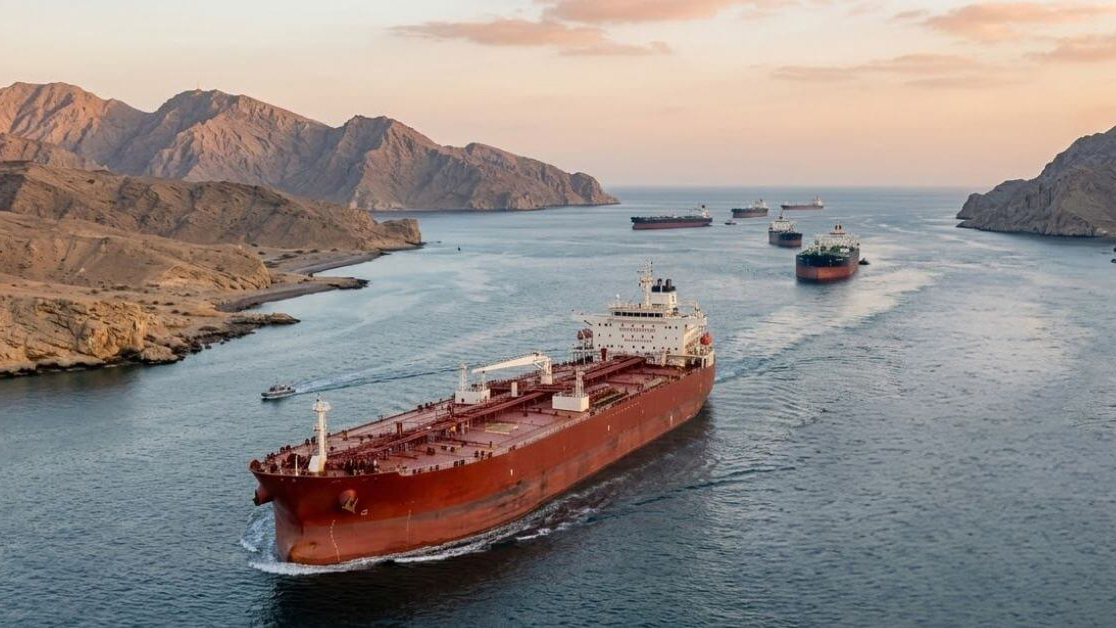
US officials said on Thursday that, as part of a fifth consecutive day of operations, an empty tanker was disabled after it ignored multiple warnings. Hellfire missiles were fired at the vessel’s smokestack, they said.
Reuters reported that on Wednesday evening, the United States attacked Iran’s coastal defence systems and missile bases. Earlier on Wednesday morning, strikes also hit a cruise missile storage facility and launch site on Greater Tunb Island.
Iranian state media reported for the first time that the capital, Tehran, had come under attack. Early on Thursday, air defence systems were heard activating in different parts of the city, according to the reports.
Iran later launched retaliatory strikes targeting Bahrain and Kuwait. No immediate reports of damage or casualties were available. Iranian officials claimed that more than 35 people had been killed and more than 300 injured in recent days of US attacks.
The US Central Command said the latest strikes were aimed at Iranian military capabilities that threatened free navigation through the Hormuz Strait, an international waterway.
Iranian media said four locations around Ahvaz had been hit. Strikes also targeted Bandar Abbas, the main port city on the Hormuz Strait, as well as areas near Sirik and Qeshm in southern Iran.
The exchanges have intensified since Iran announced on Saturday that it would close the Hormuz Strait. Before the war began, nearly one-fifth of the world’s total oil and gas supply moved through the route. After the United States reimposed a naval blockade on Iran on Wednesday, the Islamic Revolutionary Guard Corps threatened to halt all fuel exports from the Middle East, saying: “Regional energy exports will either be available for everyone, or for no one.”
Oil prices rose in international markets amid the fighting. Brent crude climbed above $85 a barrel on Wednesday, more than 15 per cent higher than before the war began, though still below the peak of about $120 reached at the height of the conflict.
US President Donald Trump said Iran would be defeated very soon and claimed Tehran was desperate to reach an understanding. Speaking at an event in Pennsylvania, Trump said US negotiators had already sent a message to Iranian representatives on Tuesday that “a deal must be made.”
Trump also indicated that Washington would expand its attacks if necessary to reopen the Hormuz Strait. He warned that, if needed, the United States would strike the fortified underground facility at “Pickaxe Mountain” linked to Iran’s disputed nuclear programme.
A few weeks earlier, the two countries had signed a memorandum of understanding aimed at ending the war and restarting talks on Iran’s nuclear programme. Iran’s chief negotiator, Mohammad Bagher Ghalibaf, said the agreement would become meaningless if its provisions were not implemented.
In a statement, Ghalibaf said: “If Iran does not receive any benefit from this memorandum of understanding, then we have no reason to comply with it.” Mohammad Bagher Ghalibaf also said maintaining “Iranian management” in the Hormuz Strait was essential to the country’s security and that Iran was now fighting “an existential war against America”.
An Iranian military spokesperson said the only way to reopen the Hormuz Strait was for the United States to honour the terms of the memorandum of understanding. Experts said the document’s vague language and clauses concerning responsibility for “safe passage” in Hormuz had deepened confusion over the Trump administration’s recent strategy.
Amid the tensions, Trump said late on Wednesday that Iran had allowed an American citizen “wrongfully detained” since late 2024 to leave the country. Writing on Truth Social, Trump said: “The United States is grateful for this goodwill gesture by Iran.”
Human rights lawyer Jared Genser identified the released American as Dena Karari. Genser said Karari had been unable to leave Iran since December 2024 and was now safely returning to the United States. Jared Genser also thanked Trump for efforts to secure the release.