
Myanmar says it will repatriate 300,000 Rohingya from Bangladesh if security improves
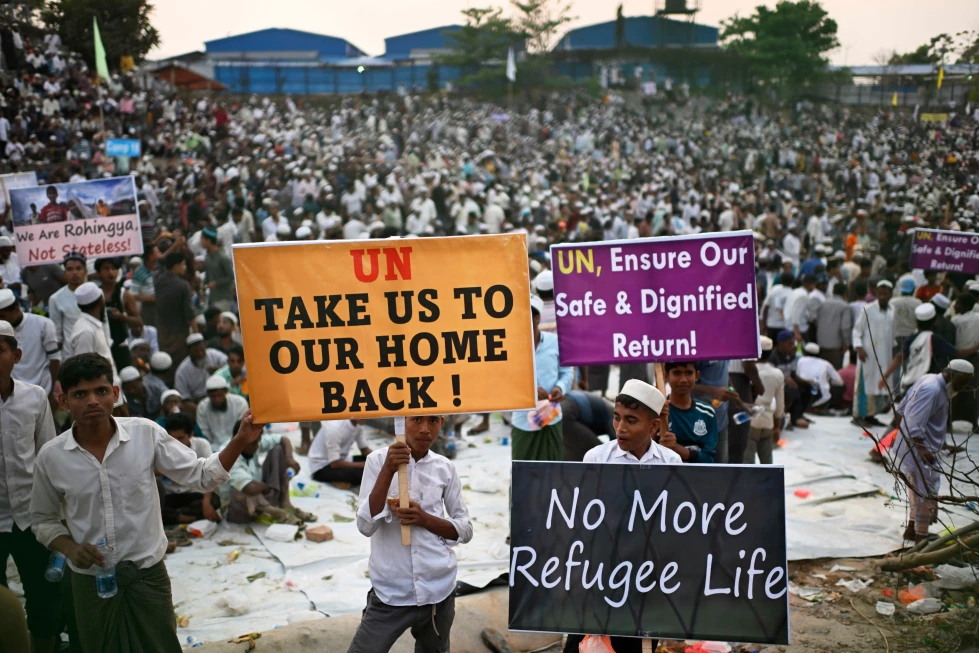
Myanmar has said it will take back nearly 300,000 Rohingya from refugee camps in Bangladesh once the security situation improves, according to a Foreign Ministry statement issued on Saturday. The ministry said the individuals had been identified, after verification, as former residents of western Rakhine State.
The statement came as the Rohingya crisis entered its ninth year. In 2017, about 700,000 Rohingya crossed into Bangladesh to seek refuge following a sweeping military crackdown in Myanmar. Several hundred thousand more had already been living in Bangladesh after fleeing earlier waves of violence.
Following the scale and brutality of Myanmar’s military operations, the United Nations and the wider international community accused the country of genocide and ethnic cleansing. Myanmar, however, does not recognise the Rohingya as one of its 135 officially recognised ethnic groups. Instead, it refers to them as “Bengalis”, a term implying “illegal immigrants” from Bangladesh.
Myanmar’s Foreign Ministry said that by the end of July it had examined a list of 828,824 Rohingya supplied by Bangladesh. Of that total, it said it had been able to verify the identities of 426,545 people.
Among those verified, 308,797 were identified as former residents of Rakhine, the ministry said.
Myanmar said it had failed to successfully verify the identities of 113,507 people. It also claimed that 4,241 people had been involved in “terrorist activities”.
The ministry said it would continue efforts to take back the verified former residents from Bangladesh once the security situation in Rakhine stabilises.
Myanmar also rejected claims that more than 1 million people had been displaced from Rakhine. According to its version of events, more than 540,000 people crossed into Bangladesh after the 2017 violence, while more than 200,000 remained in northern Rakhine.
Bangladesh and Myanmar agreed in 2018 on a two-year framework for Rohingya repatriation. That initiative effectively collapsed after Myanmar’s 2021 military coup. Armed resistance against the junta spread across the country after the elected government was overthrown, and repatriation efforts have not materialised since.
Fresh conflict erupted in 2023 between Myanmar’s military and the Arakan Army, an armed group in Rakhine. The fighting displaced more people across the state and forced many to flee to Bangladesh and other countries. The Arakan Army now controls large parts of Rakhine.
Deteriorating living conditions in Bangladesh’s refugee camps, declining international humanitarian aid, and the lack of prospects for a safe return to Myanmar have pushed many Rohingya in recent years to attempt dangerous sea journeys to Malaysia and Indonesia.
Last July, Malaysian Prime Minister Anwar Ibrahim said Myanmar had agreed to take back 5,000 Rohingya living in his country. At the time, however, Myanmar Foreign Ministry official Han Win Aung told the Associated Press that the programme applied only to verified Myanmar nationals held in Malaysian detention centres. He denied reports that any decision had been made to take back Rohingya.
Topics:
Myanmarrohingyarohingya crisisBangladeshForeign MinistryRefugeeArakan ArmyMalaysiaUnited Nations