
Nepal Flash Floods Kill 157, 403 Tourists Missing Near Tibet Border
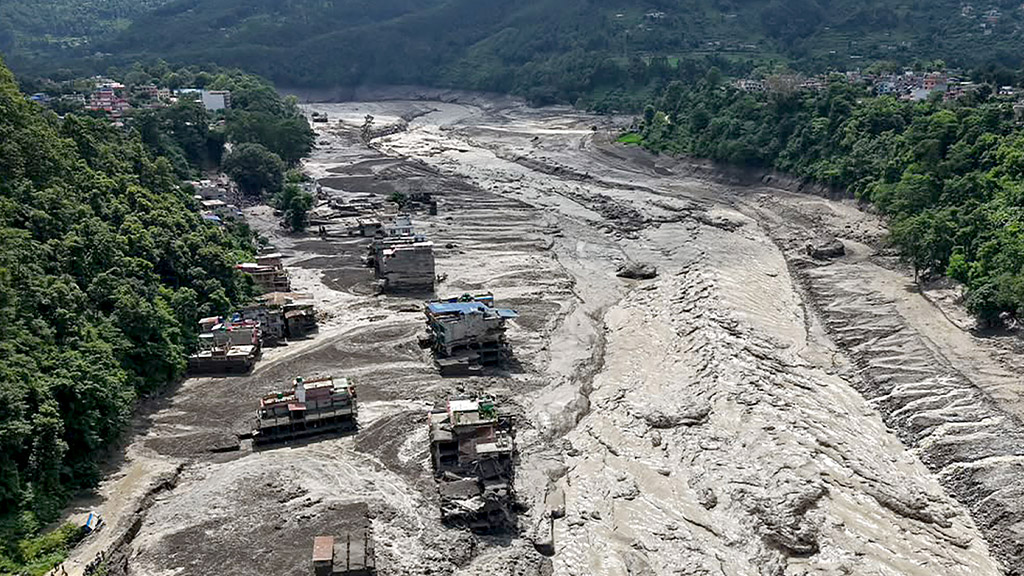
At least 157 people have been killed and 403 tourists remain missing after devastating flash floods and landslides struck areas near the Nepal-Tibet border, authorities said. Powerful floodwaters swept away villages and damaged roads, bridges and electricity projects, while rescue operations continued in affected mountainous areas.
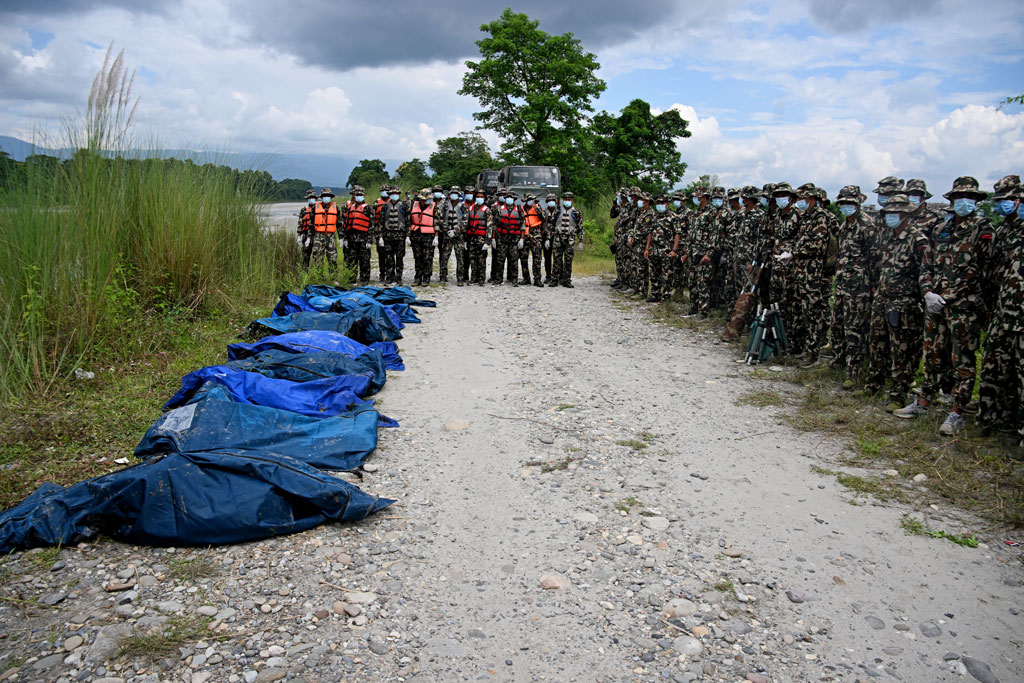
Nepal Police said late Wednesday that 157 bodies had been recovered. Authorities were continuing to move residents from high-risk areas to safer locations.
Nepal’s Tourism Ministry said 403 tourists had not been traced following the floods, including 341 foreign nationals. The missing foreigners include 142 Indian citizens, as well as nationals of Australia, the United Kingdom, Malaysia, the Netherlands, Portugal, South Africa, South Korea and the United States.
Nepal Police spokesperson Abinarayan Kafle said 28 police personnel were also among those missing.
Across the border in China’s Tibet, at least three people were killed and another 265 were missing in Gyirong County, Chinese authorities said. State broadcaster CCTV reported that the exact casualty figures were still being verified.
China’s state news agency Xinhua said a landslide in Tibet’s Gyirong area damaged a land border crossing between China and Nepal, causing major casualties and leaving many people missing. The landslide also damaged China’s Gyirong Port and severed road links, communications and electricity supplies in the Shigatse region, Xinhua said.
Chinese President Xi Jinping ordered all-out efforts to rescue the missing and called for stronger monitoring and early-warning systems to prevent a second wave of disasters.
Rescue operations in Nepal have faced major obstacles, with water levels in the affected Syaphrubesi and Timure areas too high for helicopters to land. Both areas are located in the mountainous Rasuwa district, home to about 50,000 people.
District Administrator Narendra Pariyar urged people living along the Bhote Koshi River to move quickly to higher and safer ground. Reports indicated that several nearby villages and infrastructure project sites had been swept away by floodwaters, he said.
Nepal government spokesperson Smita Pokharel said the government had sought assistance from India and China for the rescue operation. Prime Minister Balendra Shah called on the public to remain united following the disaster.
“The government has taken full responsibility for arranging rescue, treatment, food and shelter,” Shah said in a statement. “Everyone must stand together and remain patient during such a disaster.”
Prime Minister Shah also held an emergency meeting of the National Disaster Risk Reduction and Management Authority to review the situation. Shah said in a social media post that coordination had begun with medical teams, scouts and the Red Cross to take necessary measures.
The Nepal Army deployed helicopters and disaster-response-trained personnel to affected areas. The army said it was gathering detailed information on the scale of the damage.
Nepal climate justice activist Prayash Adhikari described the flooding as “terrifying,” saying entire villages had been wiped out. Speaking to Al Jazeera from Kathmandu, Adhikari said hundreds of people were missing and that buildings, schools, bridges and highways had been destroyed by the floodwaters.
Kosh Raj Koirala, editor of the Kathmandu-based English daily Republica Daily, said many people were completely unprepared when the flash floods struck because there had been no heavy rainfall in the area at the time.
“People were in their homes, but house after house was swept away by the powerful river current,” Koirala said.
Videos released on social media by Nepal Police and other sources showed muddy torrents rushing through mountain valleys.
Nepal’s power infrastructure also sustained extensive damage. The Nepal Electricity Authority said nearly 430 megawatts of generation capacity, including hydropower and solar projects, had been affected.
The authority said electricity supplies had been disrupted after facilities within power generation, transmission and distribution systems were damaged.
Eight South Korean nationals working at a hydropower project in Nepal were also reported missing, while 10 others were trapped, South Korea’s Foreign Ministry said. The missing and stranded workers are employees of Korea Energy and Doosan Enerbility.
South Korea’s Foreign Ministry said Nepal had already sent rescue teams to the affected area. South Korea has formed a special task force led by its foreign minister and plans to send a joint rapid-response team comprising government officials, firefighters and police personnel to Nepal as soon as possible.
Fears have also emerged that the flooding could affect India. An Indian official said evacuation efforts had begun in six districts of Bihar state amid concerns that floodwaters could reach the region.
Search operations for missing people and assessments of the full extent of the damage were continuing as rescue work remained the biggest challenge in the flood- and landslide-hit mountain areas along the Nepal-Tibet border.