
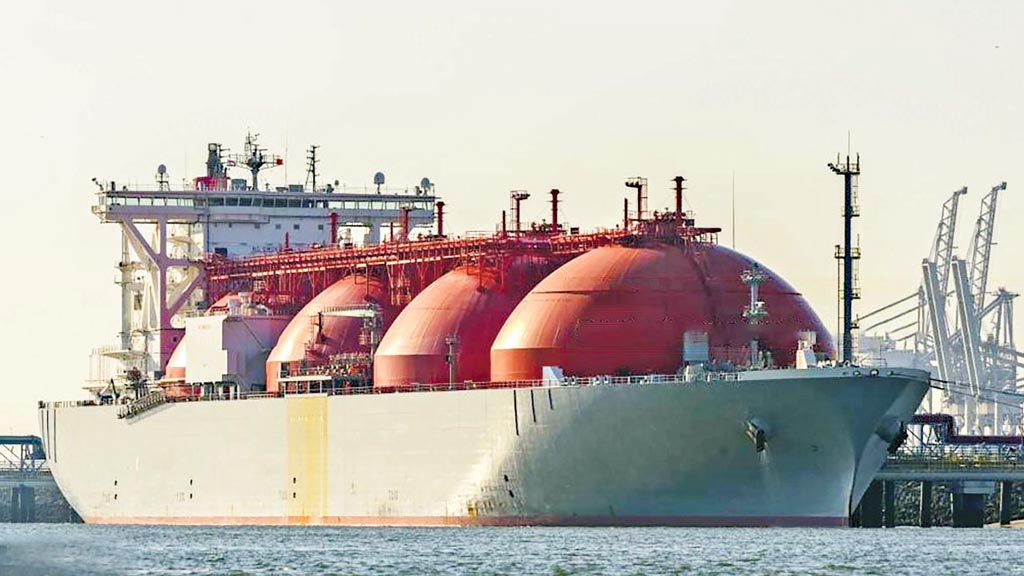
Bangladesh’s LNG supply began gradually increasing from Monday night after repairs were completed at a floating LNG terminal following 15 days of disruption, officials said. The newly repaired terminal is now supplying gas at 200 million cubic feet, with output expected to exceed 300 million cubic feet by evening.
Engineer K.M. Zahidul Islam, an official of the LNG division of Rupantarita Prakritik Gas Company Limited (RPGCL), which manages LNG terminal operations, confirmed the development to Ajker Patrika. K.M. Zahidul Islam said gas supply from the two LNG terminals would reach 800 MMCFD by evening.
Daily LNG supply had fallen to 500 million cubic feet after a fire at the Excelerate Energy LNG terminal on 21 July. The disruption reduced supply through the national transmission line to 2,100 million cubic feet per day, causing widespread hardship in households, transport and industries.
RPGCL officials said there is no shortage of LNG cargoes in the supply line until 15 August. RPGCL officials said there is therefore no immediate risk of a fresh gas crisis.
Petrobangla officials said supply in the national transmission line has risen to more than 2,400 million cubic feet following the increase in LNG supply. Bangladesh’s daily gas demand stands at 3,800 million cubic feet, leaving a shortfall of more than 1,000 million cubic feet even after LNG supply operations resumed.
Industrial production has slumped sharply since the FSRU shutdown. Factories have also been hit by severe electricity load-shedding alongside the gas shortage. Most establishments are continuing partial production on a reduced scale.
A large number of industrial units in the Gazipur area have declared a four-day closure from 5 August by combining the government holiday with the weekly holiday, according to those concerned. Industrial owners said they were forced to announce the shutdown because of the lack of gas and electricity, despite the severe impact on production and supply chains.
Domestic gas fields once produced about 2,800 million cubic feet per day, but output has now fallen to 1,638 million cubic feet. Production has been declining steadily as reserves are depleted. Bangladesh began importing LNG in 2018 to help manage the shortfall.
Two FSRUs were installed for that purpose, with the capacity to supply a maximum of 1,100 million cubic feet of gas. With one unit out of operation, supply fell by about 550 million cubic feet.