
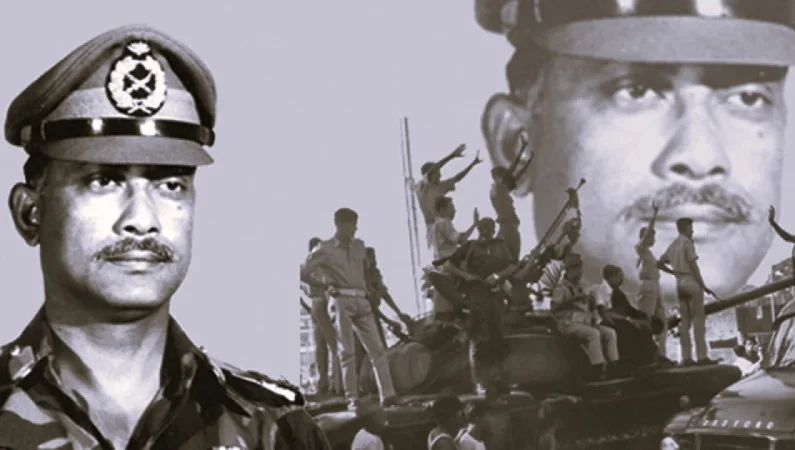
7 November 1975 is a day written in golden letters in the political history of Bangladesh. Amid deep political uncertainty, instability and a constitutional crisis, the turning point brought about in the life of the nation that day by patriotic soldiers and civilians remains a landmark event in safeguarding the country’s independence, sovereignty and order. Inspired by patriotism, soldiers and civilians risked their lives that day to protect the country’s independence and sovereignty.
‘National Revolution and Solidarity Day’ is a unique symbol of the protection of national independence, sovereignty and territorial integrity. The rare example of patriotism demonstrated through the united efforts of soldiers and civilians on that day remains a source of inspiration.
Having passed through many ups and downs in its history, the country has now embarked on a stable democratic journey. Our goal is to transform Bangladesh into a developed and welfare-oriented state.
7 November is a day that shaped our future and changed the course of our history. The 7 November uprising by soldiers and civilians was far more than an ordinary military coup. Its significance lay much deeper. The unprecedented uprising that took place through the coming together of soldiers and civilians on 7 November was a story of an extraordinary alliance between disgruntled ordinary soldiers and a deprived populace.
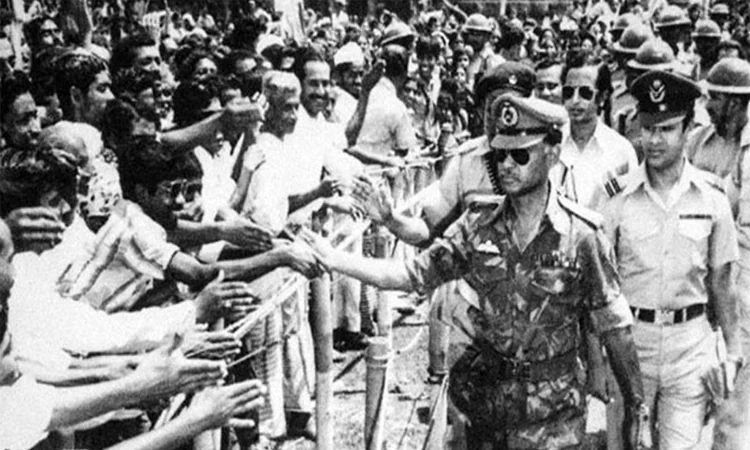
The historic march of soldiers and civilians towards Dhaka that day was not merely a struggle for a change of power. It was an irresistible popular resistance in support of establishing multi-party democracy, safeguarding independence and sovereignty, and confronting internal disorder. The day continues to remind us that unity is the greatest strength in times of national crisis. If a nation can stand united at a moment of crisis, it can thwart the activities of any destructive force.
Although Sheikh Mujibur Rahman spent his life campaigning for democracy, after coming to power he deprived people of their political rights and freedom of speech. On 25 January 1975, in newly independent Bangladesh, he introduced the one-party BAKSAL system. All newspapers except four were shut down. The general public did not welcome this attempt to perpetuate the government's grip on state power.
Misrule led to a devastating famine in the country in 1974. Subsequent research has established that there was no particularly acute shortage of food in the country at the time. However, owing to rampant corruption and irregularities in the distribution system, food failed to reach ordinary people.
When Sheikh Mujibur Rahman and most members of his family were killed in a military coup on 15 August 1975, the country plunged into a state of extreme chaos. The coup leaders appointed Awami League leader Khondaker Mostaq Ahmad as President. However, disorder emerged in the administration of the country, and the chain of command in the armed forces was on the verge of collapse.
Against this backdrop, a military coup took place on 3 November 1975 under the leadership of Brigadier Khaled Mosharraf. Army Chief Ziaur Rahman was removed from his post and placed under house arrest at Dhaka Cantonment. Khaled Mosharraf promoted himself to the rank of Major General and assumed the post of army chief.
During this period, the four national leaders—Syed Nazrul Islam, Tajuddin Ahmad, AHM Qamaruzzaman and Captain Mansur Ali—were brutally killed inside Dhaka Central Jail. From 3 to 6 November, the country was, in effect, left without a functioning government. Khondaker Mostaq Ahmad was removed from the presidency, and Justice Abu Sadat Mohammad Sayem was appointed as the new President.
The military coup of 3 November provoked a strong reaction among ordinary members of the armed forces. They did not support Khaled Mosharraf’s coup and became increasingly agitated. Late on the night of 6 November, in the early hours of 7 November, ordinary soldiers revolted inside the cantonment. Dhaka Cantonment resounded with slogans such as, ‘Soldiers are brothers; no officer is above a soldier.’
At this time, the soldiers freed General Ziaur Rahman from captivity. Ziaur Rahman was extremely popular among the troops. Ordinary soldiers believed that he was the only person capable of restoring discipline in the army.
When the leading figures behind the 3 November coup—Khaled Mosharraf, Colonel Khondaker Nazmul Huda and Lieutenant Colonel ATM Haider—sought refuge at the 10th East Bengal Regiment in Sher-e-Bangla Nagar, they were brutally killed there.
Having returned from the brink of death through the counter-coup of 7 November, General Ziaur Rahman restored the chain of command in the army within a short time.
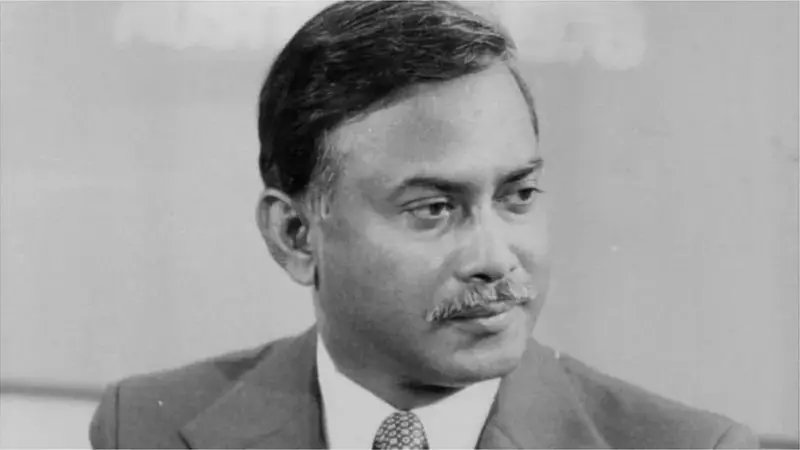
After 7 November, Ziaur Rahman continued to serve as Chief Martial Law Administrator. Subsequently, when President Justice Abu Sadat Mohammad Sayem resigned on 21 April 1977 on health grounds, Ziaur Rahman assumed the office of President of Bangladesh that same day.
On 3 June 1978, Ziaur Rahman was elected President through a direct vote of the people. The soldiers and civilians had confidence in him because he was the Proclaimer of Independence and one of the sector commanders of the Liberation War. His personal integrity was legendary. For these reasons, he became a symbol of trust for soldiers and civilians. He repaid that trust with remarkable skill and efficiency.
The successful uprising by soldiers and civilians on 7 November affirmed our national identity. In place of Bengali nationalism, Ziaur Rahman adopted Bangladeshi nationalism as state policy. This resolved the identity crisis that had existed among us as a nation. After independence, all means of production were brought under state control, causing once-profitable enterprises to become loss-making concerns. These institutions gradually turned into centres of corruption and irregularities.
In the light of the realities of the time, the process of denationalising state-owned industrial enterprises began after 7 November. President Ziaur Rahman’s economic policies were ahead of their time, pragmatic, highly effective and productive. A market-oriented economy was pursued during this period.
It was during President Ziaur Rahman’s tenure that Bangladesh first began exporting readymade garments. One of his outstanding achievements was the establishment of Export Processing Zones (EPZs). EPZs have made an important contribution to the production and export of Bangladeshi goods.
President Ziaur Rahman took the initiative to establish an effective regional cooperation organisation involving countries in the neighbourhood of South Asia. He began preliminary contacts towards the formation of SAARC. However, his death brought that initiative to a partial halt.
Subsequently, SAARC was established in 1985 at a summit in Bangladesh attended by the heads of state and government of seven South Asian countries. However, an influential country imposed a condition that no bilateral issues could be discussed within SAARC. Acceptance of this condition undermined the very purpose for which the organisation had been established.
Ziaur Rahman incorporated ‘absolute trust and faith in Almighty Allah’ into the fundamental principles of the state, replacing secularism. Bangladeshi nationalism was incorporated into the Constitution in place of Bengali nationalism. The one-party BAKSAL system was replaced by a multi-party democratic system. Only a handful of military officers around the world have voluntarily introduced a democratic system after taking control of state power. Ziaur Rahman was one of them.
Moving away from a one-directional foreign policy, Ziaur Rahman gave practical effect to the principle of ‘Friendship to all, malice towards none’. During this period, bilateral relations with the United States, China, Saudi Arabia and other Muslim countries were strengthened. Formal manpower exports also began for the first time during Ziaur Rahman’s tenure. Today, manpower exports are the country’s second-largest source of foreign currency earnings.
During Ziaur Rahman’s tenure, Bangladesh developed excellent bilateral and multilateral relations with the Muslim world. In some cases, he even acted as a mediator in resolving bilateral disputes between Muslim countries. He earned praise for his role in mediating efforts to end the Iran-Iraq War.
After 7 November 1975, the focus of the country’s politics shifted from urban centres to rural areas. Through programmes such as canal excavation and the establishment of village courts, the participation of marginalised communities in development activities was ensured.
President Ziaur Rahman travelled from village to village, often on foot. He mixed with farmers and workers as one of their own. He said that the days of sitting in luxurious urban buildings and thinking about the welfare of rural people were over. To think about the welfare of rural people, one had to go to the villages. One had to mix sincerely with villagers and understand their suffering and hardships.
The spirit of the historic uprising by soldiers and civilians on 7 November 1975 repeatedly inspires us with patriotism. There is no alternative to 7 November when it comes to building national unity. We must move forward with the spirit of the uprising of 7 November 1975 and that of 5 August 2024 in our hearts. Various conspiracies against Bangladesh are still under way.
We must confront these conspiracies together. We must remember that the interests of the country are far greater than individual or party interests. Therefore, the national interest must always take precedence. The expectation for the future is greater national unity. If we remain united, no one will be able to halt our progress.
(Writer: Dr Anwarullah Chowdhury is a former Vice-Chancellor of the University of Dhaka, Professor Emeritus at the University of Dhaka, and a former Ambassador of Bangladesh to Bahrain.)