
Bangladesh’s National Parliament on Monday passed the Finance Bill, 2026, the legal basis for implementing the budget for fiscal year 2026-27, by voice vote after wide-ranging criticism, questions from lawmakers and several important amendments.
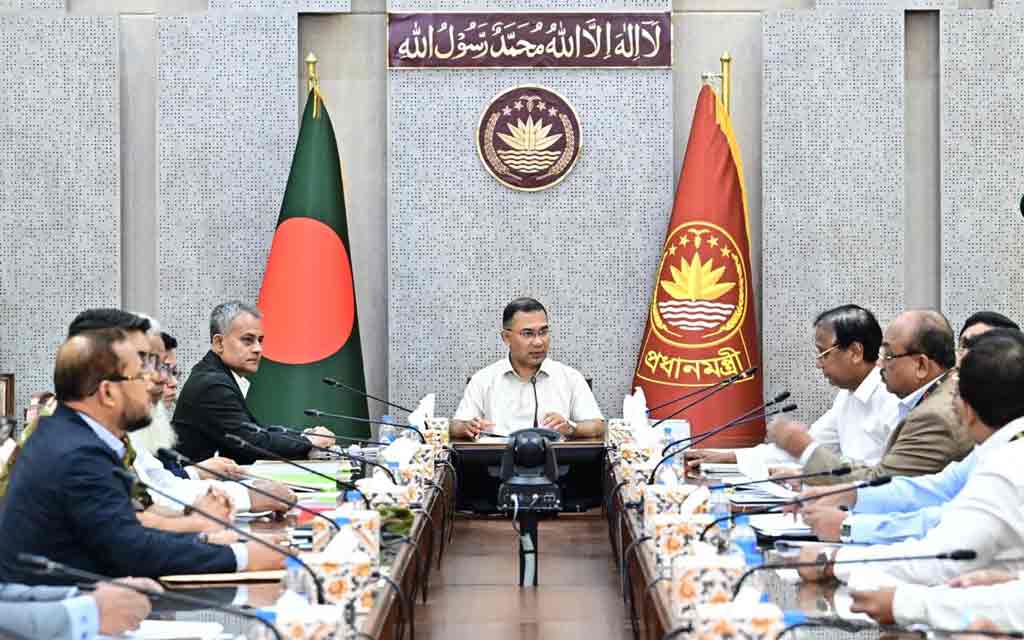
The bill was passed after Finance Minister Amir Khosru Mahmud Chowdhury placed it before the House for final approval at the invitation of Speaker Hafiz Uddin Ahmed.
Before the vote, lawmakers held a long and lively discussion on proposals for public opinion verification and on the bill’s general principles.
At the start of the sitting, Amir Khosru Mahmud Chowdhury moved that the Finance Bill, 2026 be taken into immediate consideration by Parliament to give effect to the government’s financial proposals and amend several laws.
After the bill was tabled, several members, including independent lawmaker Rumin Farhana of Brahmanbaria-2, proposed sending it for broader public scrutiny. Lawmakers raised questions over the large budget deficit, the burden of taxes and VAT, unprecedented corruption in the banking sector, mismanagement in health and education, and the reality of loan assurances linked to the prime minister’s visit to China.
Following lengthy discussion on those criticisms and proposals, Parliament passed the bill with multiple amendments.
In his concluding speech on the budget after the bill’s passage, the finance minister said the current government had inherited an extremely weak economy and a fragile institutional structure, but remained fully optimistic about moving the country towards sustainable growth.
Amir Khosru Mahmud Chowdhury said Bangladesh would be able to overcome all obstacles through effective leadership, strong institutions, efficient public administration and active public participation, no matter how great the challenges.
The finance minister said the government was now moving gradually from a debt-dependent economy to an investment-driven one. Private initiative, innovation and employment would form the main basis of the country’s future growth, he said, adding that the government wanted to build a Bangladesh where the benefits of development would reach everyone and talent and hard work would be properly valued.
Thanking lawmakers for what he described as a long and constructive discussion on the budget, the minister said their views reflected public expectations. Amir Khosru Mahmud Chowdhury also welcomed constructive criticism from economists, businesspeople and the media, saying the proposed budget was not merely an annual account of income and expenditure, but a reliable roadmap for restoring economic stability, increasing investment and establishing social justice.
Responding to questions over the budget’s inflation target of 7.5 percent and GDP growth target of 6.5 percent, the minister said the current government had inherited a distressed economy because of prolonged policy failures, unchecked corruption, money laundering, manipulation of the exchange rate and geopolitical instability in the Middle East.
The minister said the crisis could be overcome through positive trends in agriculture, industry, services and remittance income, along with the government’s strong policy measures.
Replying to criticism of the high revenue target, Amir Khosru Mahmud Chowdhury said the government would not raise tax rates, but would instead widen the tax net. To increase transparency, tax policy and tax administration were being fully separated, he said, while promising strict measures against tax evasion.
The finance minister also said traditional markets and small grocery shops would remain completely outside the proposed single-rate VAT system for small businesses.
Amir Khosru Mahmud Chowdhury said tax collection by the National Board of Revenue, or NBR, had exceeded Tk 4 lakh crore for the first time in the current fiscal year as a result of the government’s timely initiatives.
He said development expenditure would be increased and operating expenditure reduced in the next fiscal year. In fiscal year 2026-27, 33.7 percent of the total budget would be spent on development, up from 27.27 percent in the current fiscal year, while operating expenditure would be reduced to 66.3 percent from 72.73 percent.
Criticising excessive borrowing by the previous government, the finance minister said Bangladesh’s debt risk had risen from low to medium because of indiscriminate borrowing in the past.
He said total government debt stood at about Tk 21,44,000 crore at the end of fiscal year 2024-25, equivalent to 38.61 percent of GDP. Of that, domestic debt was Tk 11,95,000 crore and foreign debt Tk 9,49,000 crore. Servicing the principal and high interest on that inherited debt was creating enormous pressure on the government’s finances, he said.
To reduce debt dependence, the government planned to cut bank borrowing by Tk 6,000 crore in the next fiscal year, quickly list state-owned enterprises on the stock market, and expand bond and equity financing.
The finance minister also said the government planned to form private investment funds in Hong Kong, London and New York to attract foreign investment.
Amir Khosru Mahmud Chowdhury said the government had taken a hard line against financial crime. Until May 2026, assets worth a total of Tk 72,343 crore had been seized or frozen at home and abroad in 11 priority cases.
He said 23 mutual legal assistance, or MLA, requests had been sent to 13 countries to recover laundered money, and related agreements with Malaysia and Hong Kong had been finalised.
Legal action had also begun against six major borrowing entities, while more than 15 affected banks had signed over 60 confidentiality agreements with international asset recovery firms, the minister said.